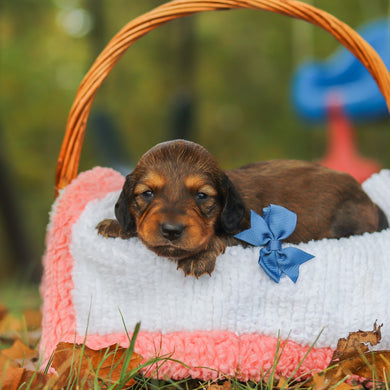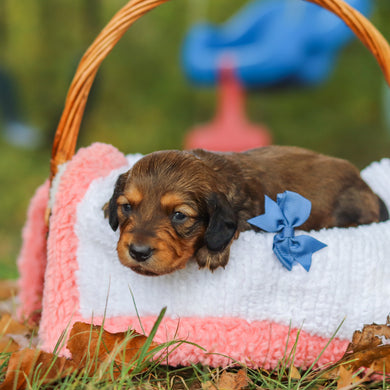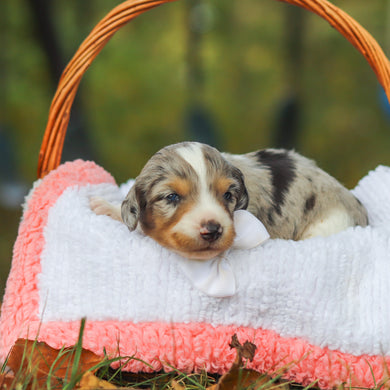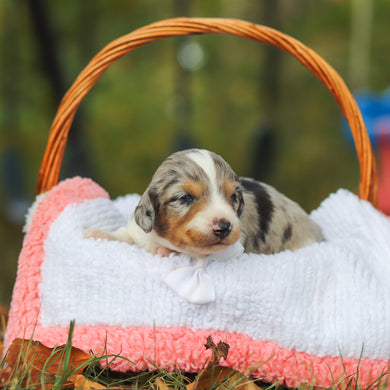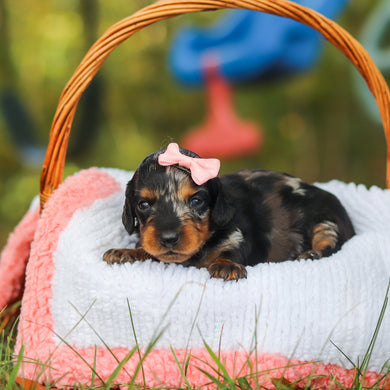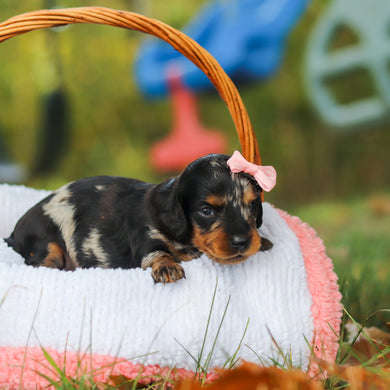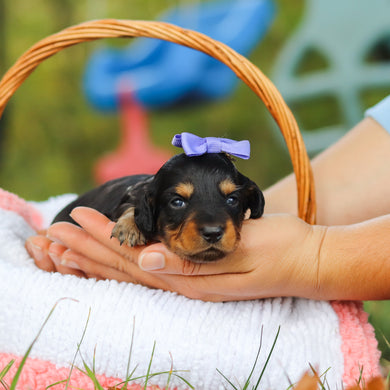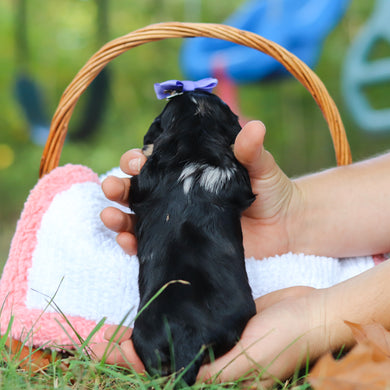

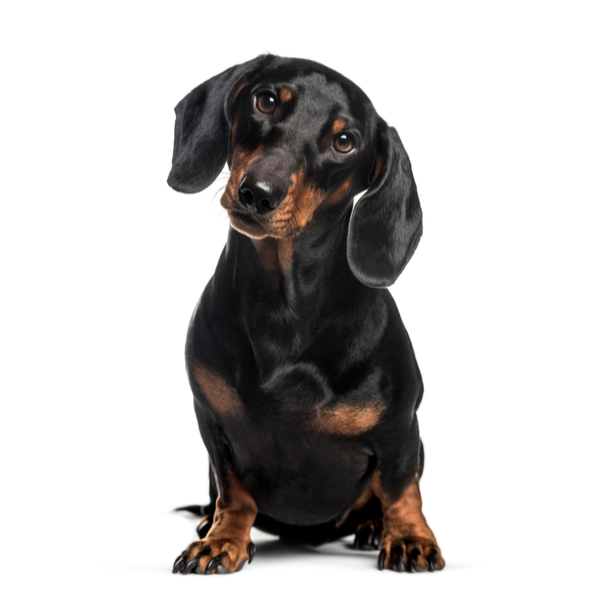
MINIATURE DACHSHUND PUPPIES FOR SALE
Lively. Courageous.
Miniature Dachshunds are intelligent, affectionate dogs characterized by their distinctive long, slender bodies and spirited personalities. Bred originally for hunting, they are bold and curious by nature, yet thrive as devoted family pets. Their manageable size and loving temperament make them a wonderful choice for households of all kinds. With proper care and early socialization, these pups develop into confident companions who thrive in everyday life.
At Happytail Puppies, every miniature dachshund is raised in a nurturing environment by breeders with years of hands-on experience. Our team adheres to ethical breeding practices, prioritizing health, temperament, and early development. Anyone looking for a miniature dachshund for sale can browse our carefully curated selection on the available puppies . Each listing is backed by transparency, and we’re here to provide expert guidance throughout the entire adoption process.
Our responsibility doesn’t end when a puppy goes home. We offer trusted pet insurance options to support your pup’s lifelong health and well-being. Families who choose Happytail Puppies can count on our commitment to quality, compassion, and continuous support—built on real-world experience and a passion for happy, healthy dogs.

Temperament
Their personalities can vary depending on the type. The wirehaired Dachshunds can sometimes be mischievous, reflecting the Terrier in their background. Longhaired Dachshunds are more calm and quiet, while the smooth type can be anywhere in between.
Doxies want to spend time with their people. Their compatibility depends on the individual dog and how children interact with them. They do well with other pets, especially other Dachshunds, but they may attempt to establish dominance.

Appearance
Their heads are long and their skulls are arched and convex with eyebrows that protrude. They have long muzzles, oval-shaped eyes, and powerful jaws with a scissor bit. Their droopy ears hang down to their cheeks. Doxie bodies have moderately retracted abdomens and protruding sternums, and their tails are carried straight and in line with their spine.
Their coats vary in colors and patterns. The wirehair variety has a thick, short overcoat and soft undercoat. Longhairs have long and slightly wavy hair. The smooth variety has short, shiny hair.
The Miniature size weighs 11 pounds or less at 12 months of age or older

Exercise
A couple of short walks a day are helpful to keep them active, but a good game of fetch can be enough to tire them.
Because of your Dachshund’s long back, they can develop illnesses or injure themselves when jumping up steps or onto high perches like couches or beds. Providing your Doxie with a ramp can prevent the development of serious illness. When you pick them up, be sure to support them at both ends to protect their long spine.
Many healthy adult Miniature Dachshunds benefit from around 30–60 minutes of daily activity, adjusted to their individual needs. Several short walks throughout the day can be a good starting point, with distance and intensity increased gradually as appropriate.
Exploring The History Of Miniature Dachshund
Dachshunds originated in Germany and were called badger dogs because they were bred to hunt for small prey. They were developed over the 18th and 19th centuries to be fearless but small enough to follow its prey underground. Their long bodies and powerful legs were perfectly suited to digging and hunting badgers and other small game.
The smooth variety of Dachshund was the product of a cross between the Braque and Pinscher, and maybe the French Basset Hound. The wirehaired and longhaired are thought to have resulted from crossing the Dachshund with Spaniels and Terriers respectively.
Dachshunds began to be bred as a companion pet rather than a hunting dog in about 1800. They were favorites in many European royal courts, including Queen Victoria’s. The Miniature Dachshund was created due to their growing popularity as a family pet. The American Kennel Club (AKC) recognized the breed in 1885, and the German Dachshund Club was founded just three years later. In 1895, the Dachshund Club of America was founded.
Although the breed experienced a dip in popularity during both World War I and World War II because of its association with Germany, Dachshunds were imported to the United States and the breed began to grow. They are recognized as excellent family dogs in the U.S. and the U.K, and they are still known as proper hunting dogs in parts of Europe.
Key health concerns to be aware of:
- Intervertebral Disc Disease
- Progressive Retinal Atrophy
- Bloat
Other health conditions to be aware of:
- Deafness
- Epilepsy
- Diabetes
- Cushing's Disease
Maintenance of Miniature Dachshund
Your Dachshund won’t need regular baths unless they get themselves into something messy or smelly. The wirehaired type needs regular brushing, and stripping is required once or twice a year. The longhaired type needs more frequent brushing to prevent tangles and mats. They also need bathing and blow-drying more often than the other types. If you live in a cooler climate, you may want to give your pooch a sweater for the winter months.
You will need to attend to your Doxie’s droopy ears weekly as they are prone to fungus, mites, and bacteria. Just use a cotton ball (not a cotton swab) and ear cleaner to wipe the ears, and do not go more than knuckle deep. If you can hear their nails clicking on the floor as they walk, it’s time to trim them. Once or twice a week is a good routine. Teeth must also be brushed daily.
Like all pups, yours can benefit from early obedience training and socialization. Training will help curb problem barking and the occasional possessiveness with toys. They respond to positive reinforcement like treats and toys. Training sessions should be fun, short, and free of repetition, and they will learn quickly.
Frequently Asked Questions About Miniature Dachshund
1. How big do Miniature Dachshunds get?
Miniature Dachshunds typically weigh 11 pounds or less as adults. Their small size makes them suitable for many living environments, but their long backs require extra care to help prevent injuries.
2. Are Miniature Dachshunds good family dogs?
Miniature Dachshunds can make affectionate and playful family companions. They are intelligent, curious, and loyal to their families. Early socialization and gentle supervision around young children can help them develop positive relationships with everyone at home.
3. How much exercise does a Miniature Dachshund need?
Miniature Dachshunds need regular daily exercise, including short walks, indoor play, and interactive games. Around 30–60 minutes of activity spread throughout the day can be a helpful starting point, depending on the dog's age and health. Avoid activities that involve frequent jumping or excessive stair climbing to protect their backs.
4. Are Miniature Dachshunds easy to train?
Miniature Dachshunds are intelligent and can learn commands and household routines, but their independent nature may make training challenging at times. Short, consistent training sessions, positive reinforcement, and early socialization can help with obedience and potty training.
5. How long do Miniature Dachshunds live?
Miniature Dachshunds typically live around 12–16 years. A balanced diet, regular exercise, routine veterinary checkups, and maintaining a healthy weight can help support their long-term health and well-being.