

Can Puppies Get Seasonal Allergies? Signs Every Owner Should Know
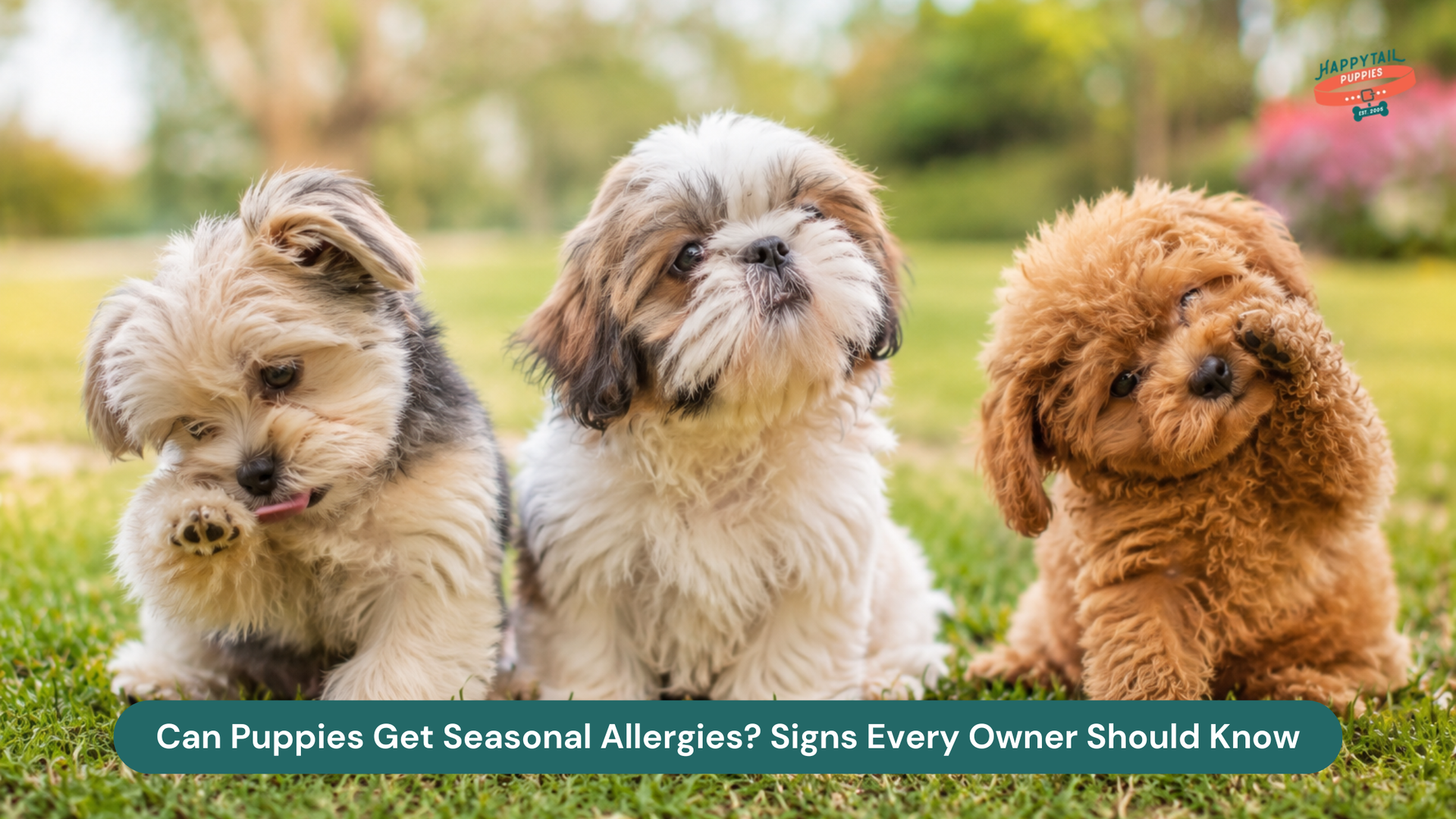
Seasonal allergies can affect puppies just as they do people. From itchy paws and watery eyes to sneezing and skin irritation, recognizing the early signs can help your puppy stay comfortable. Learn the most common symptoms, seasonal triggers, and when home care is enough or it's time to schedule a vet visit.
⚡ Quick Answer
Puppies can develop seasonal allergies, often triggered by pollen, grass, or mold. Common signs include itching, sneezing, watery eyes, red skin, and excessive licking. If symptoms persist or worsen, consult your veterinarian for proper diagnosis and treatment.
🐾 Table of Contents
A pup who rolls through the grass, sneezing between zoomies, is a familiar sight for most owners. Oftentimes, it’s nothing. However, when the sneezing continues to happen, a paw stays swollen from licking, or the same eye keeps watering after every walk. It’s something more specific that might be going on.
Seasonal allergies are often not just a human problem. Puppies also develop the same thing, and since the signs can appear like ordinary puppy quirks, they’re often missed for weeks. Knowing how these allergies work, what they appear like, and when they call for a vet visit makes it easier to detect them sooner.
Can Puppies Even Get Seasonal Allergies?
Yes, it does happen frequently. The immune system of a pup continues to learn what counts as a threat. Frequent exposure to grass, pollen, or mold over a season or two triggers the initial reaction. This is why allergies continue to surface slowly rather than overnight.
So, here’s the fundamental chain of events behind almost every allergic reaction:
- Mold spores, pollen, or grass touch the skin, paws, or nose
- The immune system flags the particle as a threat
- Histamine floods the area in response
The outcome: sneezing, itching, irritated skin, watery eyes.
Dogs experience allergies through their skin more than their sinuses. That’s the main reason that puppy allergies show up as itching. Paw-chewing first, rather than sneezing, usually puts people in the picture.
👉 Quick Check
Tap anything your pup has been doing this week to find out how the patterns add up.
Signs Every Owner Should Know
Allergy symptoms in pups do not appear all at once. So, it helps to know exactly what each individual sign looks like on its own.
Itchy, Licked-Raw Paws
The paws come in contact with more pollen, grass, and outdoor dirt than perhaps any other part of a puppy. When an allergy occurs, a tell-tale sign is frequent licking or chewing on one paw, suggesting something outdoors is causing irritation. For instance, a Cocker Spaniel puppy will behave the same way as any other breed when seasonal allergens irritate the paws.
Look out for these signs:
- Constantly licking one paw
- Discoloration between toes
- Weird swelling after outside
- Nibbled leaves that leave fur moist
If the same paw remains swollen or damp for more than a day or two, allergies are likely involved.
Watery or Red Eyes
Allergens that float close to a puppy’s face often land on the sensitive, thin skin around the eyes. The result can be a reddened or puffy eye or a clear, watery discharge, particularly in the hours immediately after playing outdoors. The same outdoor allergens can also accumulate on the skin, affecting the Dog’s Skin Oil. This can cause mild surface irritation in the eye area.
Signs of irritated eyes:
- Eyelid inflammation and redness
- Eyelids that are swollen
- A clear and watery discharge after going for walks
- Straining eyes from bright sunlight
If the eye irritation goes away in one night, chances are it’s nothing to worry about. But if the symptoms last for days, you must look into the symptoms closely.
Sneezing After Outdoor Play
It is quite normal for every puppy to sneeze a little from time to time. The difference between normal sneezing and an allergic reaction is that the former is a single sneeze, while the latter occurs as a series over time. In this case, the sneezing occurs reliably after time spent in the grass, near flowering plants, or digging in leaves.
Trends to follow:
- Sneezing straight after walks
- Lasting several minutes
- Sneezing close to flowering plants
- No other cold-like symptoms
If sneezing occurs after outdoor exposure and nothing else is amiss, likely it’s a pollen allergy.
Frequent Ear Scratching
When your pup suffers an allergic reaction, it can inflame the inside of its ear canal, too. Often, this inflammation can be recognized by increased scratching, sometimes accompanied by a slight odor or redness inside the ear. Repeated exposure to seasonal allergens can lead to ear irritation in any breed of dog, although a French Bulldog puppy may show similar signs.
Signs to look out for in the ear:
- Itchy sensation is high
- There is little redness inside the ear
- There is a slight smell near the ear
- Shaking head after outside time
If ear irritation persists in conjunction with other symptoms, you should mention allergies during a vet visit.
Irritated or Pink Skin
Puppies might have skin that appears pinker than normal, is warm to the touch, or is abnormally sensitive in the stomach and legs. This is a more common allergic reaction in puppies and usually occurs after they’ve been lying directly on the grass for some time. Dog owners exploring how diet affects shedding in dogs may also see how seasonal allergies are a visible skin change that deserves equal attention.
Where to look first:
- Abdomen and thighs
- Skin that feels hot
- They get a pink tint when we spend time outdoors
- Tactile pressure sensitivity
Because they have the least fur coverage, these areas exhibit allergic reactions earlier than any other area.
Rubbing the Face Often
It might seem odd for a puppy to drag its face along furniture, carpet, or a person’s leg, but often it is simply a puppy who is trying to relieve some itchiness that a paw cannot reach comfortably.
Reasons for face rubbing:
- Nose or muzzle itch.
- Mouth area irritation
- The area surrounding the eyes feels uncomfortable
- Friction shortly after walks
An occasional face rub is normal, but if it’s often during outdoor times, it likely points to an allergy.
Small Hot Spots After Walks
When a dog licks or scratches a particular spot excessively, it can quickly escalate into a hot spot: a small, moist, inflamed area of skin that spreads faster than most owners expect. These usually develop after a day or two of heavy exposure to allergens outdoors. Consistent grooming habits help maintain the dog's healthy skin and coat. This is especially important when the dog scratches and puts extra stress on the skin.
What do the hot spots look like?
- A patch of skin that is moist and inflamed
- Will appear in a day or two
- It will spread when untreated
- Frequently comes after licking
Hot spots can quickly develop into more severe conditions. Getting them looked at early really does help speed up the healing process.
Which Season Is Usually Behind It?
The things that are blossoming, growing, or decaying outdoors may change throughout the year, but so do the allergy symptoms of a dog.
Spring: Tree Pollen
As tree buds release their fine pollen dust, the fuzz on fur, paws, and each blade of grass in the yard gets coated. Dogs that enjoy face-planting in flower beds usually feel it first. Most of the time, it causes them to have itchy, watery eyes or to sneeze.
Summer: Grass Pollen and Mold
Prolonged stretches in parks and on lawns result in prolonged exposure to the very surfaces that contain the highest levels of allergens. During these months, paw licking tends to increase, and warm, moist conditions also make hot spots more likely.
Fall: Ragweed and Decaying Leaves
Puppies are naturally curious creatures, and because of that, they may dig through rotovated puddles of wet dark leaves as they act as mold. During this time, people often sneeze and have watery eyes, especially when walking in the woods.
Winter: Indoor Allergens
The pollen found outdoors generally disappears in winter, though other allergens may still remain. If symptoms persist through winter, they are likely not seasonal and worth mentioning at your next vet visit. The U.S. Centers for Disease Control and Prevention (CDC) states that many plants release more pollen during the warmer months.
Home Care or Vet Visit?
Sometimes you have to take matters into your own hands. Here's a general way to tell the two apart.
Usually Fine at Home
If there is constant scratching or biting at the skin, swelling around the face, spreading hot spots, or symptoms lasting longer than a week.
Worth a Vet Call
Continuous scratching or biting at the skin, swelling around the face, hot spots that keep spreading, or symptoms that last more than a week.
Building a Habit of Paying Attention
Dogs communicate mostly through body language, and changes in scratching, licking, or sneezing are among the clearest messages they send. Creating a light routine around outdoor time, using a wipe-down after walks, checking the paws for dirt before bed; all of these will do more to ensure comfort than any one product ever could.
Soon the season will change again, and so will the concrete trigger behind any symptoms. Staying inquisitive about a puppy’s behavior and treating a vet as a partner, not a last resort, is all that matters. Approaching every allergy season with a puppy this way is better than reacting only after symptoms kick in.
Frequently Asked Questions
Do puppies suffer from seasonal allergies?
It is more common than most owners expect. Many puppies first show symptoms in their first spring or summer outside, which is common with sensitive-skin breeds.
At what age do allergies start?
Between six months and two years of age, symptoms most often appear, as the immune system begins to react after a couple of seasons of exposure.
Can advancing age bring an end to allergies?
They probably don’t go away completely, but many puppies learn to cope well with them through routine baths and wipe-downs and more attention when the seasons peak.
Should you give antihistamines to dogs?
Never go without guidance first. The dosage varies based on a dog’s weight, age, and breed, so this is a conversation you need to have with your vet before trying anything.
How is this different from having a cold?
Usually, lethargy or a decreased appetite accompanies colds. When a puppy suffers from allergies, the symptoms usually include itching and irritation.