

How Often Should You Brush Your Dog? A Complete Guide
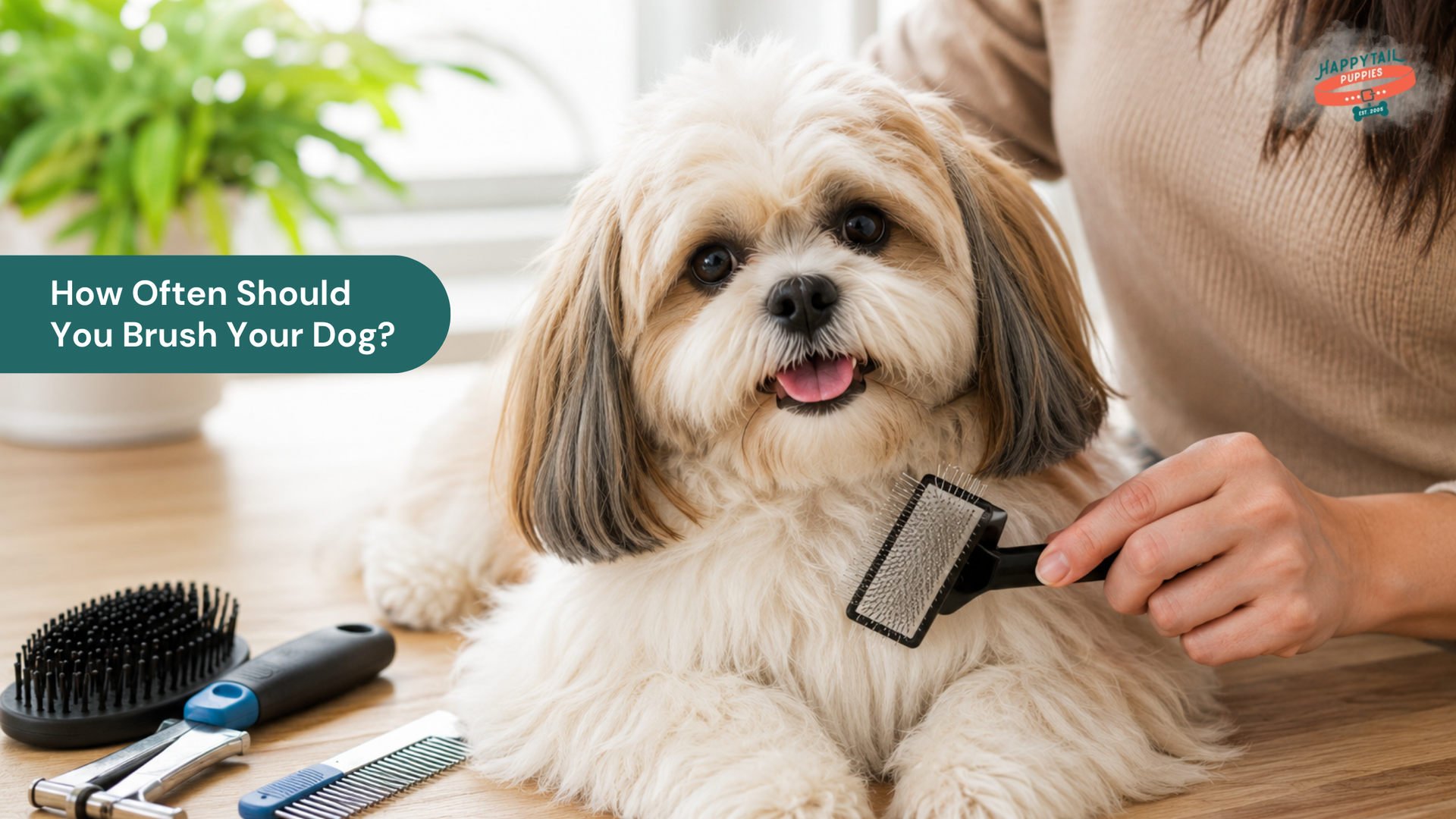
Brushing your dog's coat is more than a grooming task—it helps reduce shedding, prevent mats, and keep the skin healthy. Learn how often to brush your dog based on coat type, lifestyle, and shedding, plus discover the best grooming tools and simple tips for building a consistent routine.
⚡ Quick Answer
Brushing your dog regularly helps remove loose fur, prevent mats, reduce shedding, and keep their coat and skin healthy. Short-haired dogs may need brushing weekly, while long or curly coats often need brushing several times a week or daily to prevent tangles.
🐾 Table of Contents
Ask any three dog owners about how often they brush their pup, and you’re sure to get three different answers. Often followed by a shrug. Some treat brushing as a luxury that’s booked only for show dogs. Others reach for a brush only when the couch looks furrier than the dog does. Neither approach does the coat any real favors.
Here’s the part that most dog owners are unaware of. Brushing frequency should never be a personal choice. It works more like an in-built setting that arrives bundled with a coat that your pup was born with. In today's post, we’re going to discuss how often you should brush your dog's coat and a couple of helpful tools to keep the routine consistent.
What Actually Decides Your Brushing Schedule
Each breed has different types of coat that set their baseline. However, it’s rarely the only factor at play. Genetics, activity level, and even what’s in their diet will determine whether a dog’s brushing schedule will go up or down.
Coat Type Is the Baseline
Every coat remains on a range of sleek to seriously fluffy. And that spectrum is the initial clue to how often a brush should come out. A short, single-layer coat hardly holds onto loose hair while a dense double coat can trap it close to the skin.
Medium coats remain somewhere in between and often astonish new owners with how rapidly they tangle. For instance, the Cocker Spaniel breed carries silky feathering along the ears and legs that mats in a couple of days if it’s skipped, even while the rest of the coat continues to appear perfectly fine.
Diet's Hidden Role in Shedding
The major part that determines a brushing frequency is the diet, and this is something that most dog owners realize. A dog who consumes a nutrient-deficient food sheds heavily since a dull, dry coat releases loose hair more rapidly than a well-nourished one.
A clear insight into how diet affects shedding explains the reason why two dogs of the same breed may require different routines. One coasting through the week on a single light brush, the other might need attention almost daily.
Life Stage and Activity Level
Pups, adults, and seniors all wear their coats differently. How much a dog moves through water, mud, or tall grass might change the entire math.
Factors that dog owners should track are:
- Whether their pup’s coat is still developing texture
- Senior skin becoming drier and thinner
- Outdoor time in picking up debris
- Indoor-only dogs shedding evenly all year-round
- Recent schedule for their bath or swim
None of these factors can override the type of coat completely. However, when checked together, they explain the reason why two almost similar pups can land on very different weekly routines.
💡 Pro Tip
Brush right before bath day and not right after. Work through the tangles once the coat is dry. This prevents water and shampoo from cinching loose knots into stubborn ones.
Find Your Dog's Brush-O-Meter Reading
Here’s what to keep in check to set a realistic weekly brushing schedule.
Short Coat
Schedule: Once a Week
Short, single-layer coats in some small dog breeds rarely tangle, so one extensive weekly session can cover it with an additional shedding season.
Medium Coat
Schedule: Two to Three Times a Week
Breeds with medium coats tangle faster than they appear, mainly around the ears and legs. So, only a couple of sessions a week can keep things smooth.
Long / Curly
Schedule: Daily, Five Minutes or So
Both long and curly coats mat quickly. Therefore, a short daily pass can prevent a much longer detangling job later.
Double Coat
Schedule: Several Times a Week, Daily in Season
Double coats need more attention across both layers. Regular brushing is important during heavy shedding in the spring and fall seasons.
Reading Your Dog's Coat and Skin
A brush offers more work than just keeping the coat tidy since your pup’s fur often reveals important signs about their overall skin and health. So, learning to read those signs can make brushing a quick health check every time.
What a Healthy Coat Feels Like?
A healthy coat will feel soft to touch and often carries a faint natural sheen. This is mainly due to dog skin oil that spreads evenly across each strand whenever a brush passes through. So, keeping a dog’s coat even and smooth involves a couple of mechanical steps of moving oil from root to tip on a predictable brushing routine.
Signs the Schedule Needs Adjusting
A coat can hardly remain static for long, and small changes are important to detect before they turn into bigger issues. This emphasizes the importance of maintaining healthy dog skin and coat condition, which isn’t mainly about using expensive shampoos or giving them supplements.
Watch for These Changes:
- Dandruff showing up more often
- Dull patches losing their shine
- Unexpected odor between baths
- Small hot spots forming
-
Tangles reappearing within a day
If you detect any of these, don't get alarmed, but if there’s a pattern, it means the existing routine will need a slight bump in frequency.
Choosing the Right Brush
Selecting the right tool can make a real difference in how good a brushing session will be, irrespective of how much you spend on it. Here are a couple of options to help you find the right match for your pup’s coat.
Slicker Brush
These brushes have fine, closely spaced wire pins that work thoroughly through medium to long coats. They also pull loose undercoat without leaving a scratch on your dog’s skin.
Bristle Brush
These brushes have soft, gentle bristles perfect for short coats. They help distribute natural oils and lift away loose surface hair.
Undercoat Rake
These come with long teeth designed to reach through the topcoat and clear out dense matted undercoat on double-coated breeds.
Pin Brush
These brushes come with metal pins that glide well on long, silky coats. They can help smooth out the coat without pulling on delicate fur.
Dematting Comb
These have wide, sharp-edged teeth built to work safely through existing mats without cutting the coat short.
Turning Brushing Into an Actual Habit
Besides brushing frequency, both technique and timing are important. Rushed sessions often skip the undercoat completely and leave every tangle behind for next time.
The Technique That Actually Works
Working section-wise from legs up towards the back can make the session well-structured and ensures that no coat patches are missed.
Steps to follow:
- Check for mats before starting
- Brush in the direction of growth
- Work down to the skin
- Cover ears, legs, and tail
- Finish with a gentle comb-through
Building a Routine Dogs Enjoy
Sessions often turn into a challenge if your pup dreads the brush. So, all you need is a bit of patience initially that pays off for years.
Here’s how to make sessions calmer:
- Select a relaxed time of day
- Ensure you keep initial sessions shorter
- Offer treats while brushing
- Stop right before frustration starts showing
- Clean the brush regularly
💡 Pro Tip
A clogged brush will get half the job done. Clearing out the loose hair from the pins between sessions can keep every move as effective as the initial one.
Weekly Habit Check-In
- Brushed coat this week
- Checked for mats or tangles
- Right brush within reach
- Brush itself cleaned recently
-
Dog seemed relaxed during it
Where Home Grooming Is Headed?
Brushing habits will always change, and this shift shows up in the numbers instead of the anecdotes from local groomers.
Based on the reports from the American Pet Products Association (APPA), owning a dog increased to 71 million across households in the United States last year. Also, the recent data points to significant growth in in-home grooming routines as owners seek practical, affordable ways to keep their dogs looking and feeling their best. Those changes make better sense once the coats involved come into focus.
For instance, a Teacup Shih Tzu wears a fine, silky coat that tangles in just a day or two. A short daily brush at home is the best option instead of making frequent trips to a professional groomer for a dog of this size.
However, none of these indicate that professional grooming is not required. It means the gap between salon visits is filled with a couple of honest minutes of brushing at the kitchen table, and that’s a trend one should follow instead of resisting it.
A Little Brushing Goes a Long Way
A dog's coat asks for very little in return for everything it gives back. A soft place to rest a tired hand, a warm weight against your side, a little extra shine that says someone is looking after it well. Five minutes today rarely feels like it matters. Give it a few weeks, and it becomes the kind of quiet, dependable care a dog notices even without the words to say so.
Frequently Asked Questions
Can brushing replace a bath entirely?
Not quite. Brushing keeps loose hair and tangles under control between baths, but it doesn't clean dirt, oil buildup, or odor the way water and shampoo can.
My dog hates the brush. Should I push through anyway?
Forcing it usually backfires. Short, positive sessions with treats and praise work far better than one long forced brush-out, and most dogs come around once brushing stops feeling like a battle.
Do brushes wear out or need replacing?
Yes, bent pins, flattened bristles, or a rusted comb all reduce how well a tool actually performs. A quick check every few months keeps a grooming kit doing its job properly.
Does humid or rainy weather change how often I should brush?
It can. Damp fur tangles faster and holds onto dirt longer, so many owners find their dog needs an extra session or two during particularly wet or humid stretches.
My dog's coat looks fine, but I still find hair everywhere. What's going on?
A coat can look tidy on the surface while still shedding heavily underneath, especially in double-coated breeds.