
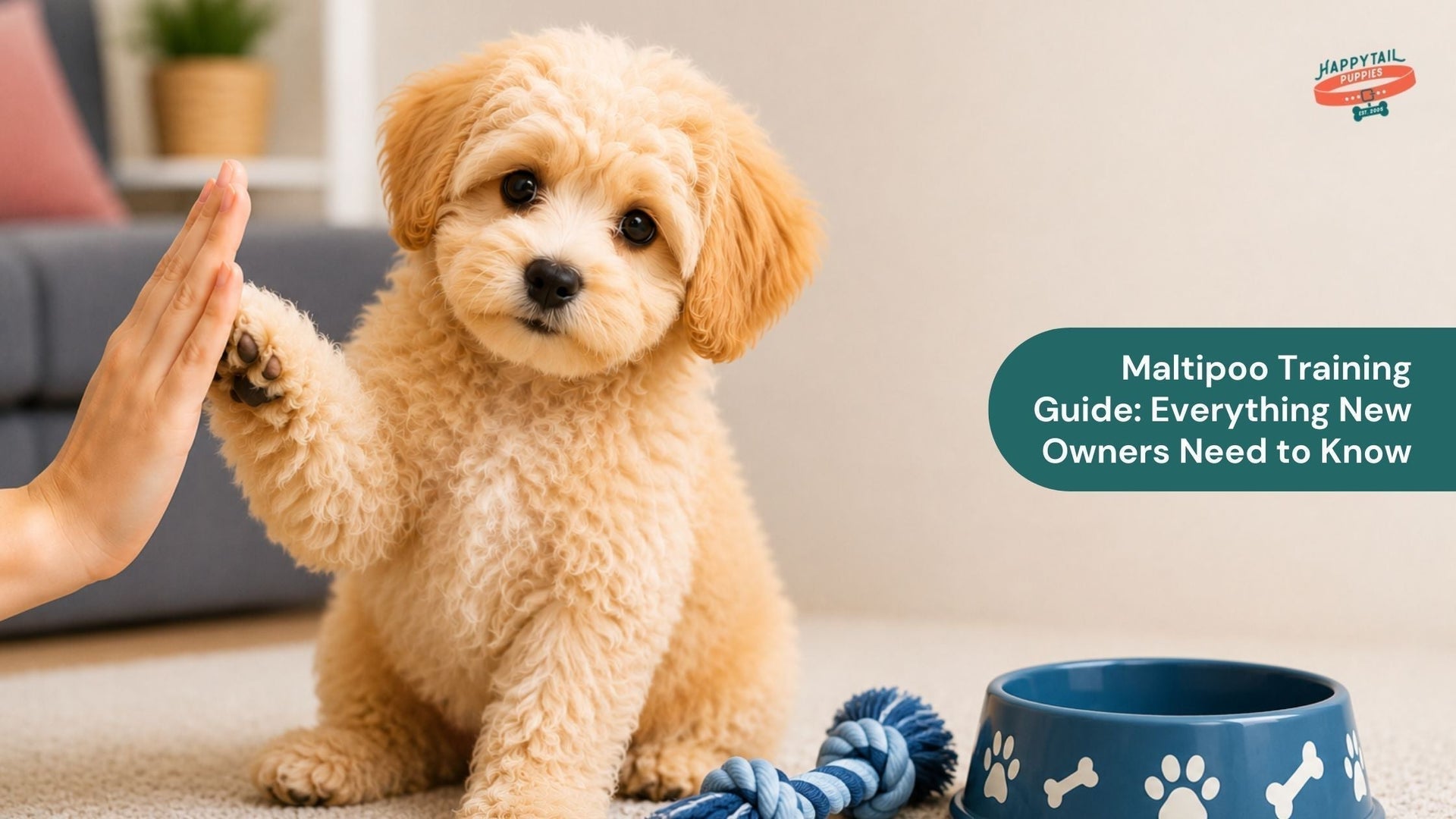
Maltipoo Training Guide: Everything New Owners Need to Know
🐾 Table of Contents
Having a Maltipoo at home is an exciting part of dog ownership. These loving, intelligent, and playful dogs are friendly and make good family pets. While they are charming and make lovely companions, training your pup will help them grow into a well-adjusted and confident adult. You and your puppy will find it easy to adapt when you start off on the right foot with training.
If you are a first-time owner, you may be wondering how to train a maltipoo puppy. Luckily, Maltipoos are willing learners and respond very well to positive punishment. When you set expectations, remain consistent, and reward good behavior, you create a strong foundation for learning and lifelong compliance.
Understanding Your Maltipoo’s Temperament
Before enrolling in classes, it is good to know how Maltipoos think and learn. These canines are supremely sociable and love to hang out with humans. They enjoy being involved in the activities of their owners and require lots of attention.
Their main personality traits include:
- Smart and inquisitive
- Greatly wanting to please
- Loving disposition
- Being sensitive to harsh corrections
- Ability to adjust to various settings
The best results from training come from reward-based methods because dogs are people-oriented.
Start Training From Day One
The first weeks of being home are essential for your puppy to learn household rules and set routines. During this phase of their development, if they are introduced to certain commands and instructions, puppies will learn quickly.
Start with:
- Sit
- Stay
- Come
- Down
- Leave it
- Wait
- Name recognition
Limit the time of each session to a short duration of 5 to 10 minutes. Try to practice these activities with your puppy throughout the day.
Many future owners devote a lot of time to learning about maltipoo puppy prices, but it is worth spending time on early training, too. A good dog is generally easier to handle, and the handling is more stable and fitting to family life.
House Training Essentials
The first major training challenge is often potty training. Help your puppy learn where to eliminate by being consistent with rules and boundaries.
To encourage success:
- After waking up, take your puppy outside
- Plan restroom trips after eating
- Always use the same potty area
- Immediately reward your puppy’s outdoor trips
- Keep an eye on indoor activity
Prevent punishment when accidents happen. Focus on rewarding the behavior that you want to see when your puppy gets it right.
Socialization Builds Confidence
The behavior of your Maltipoo is greatly influenced by socialization. Puppies that are socialized experience different environments and experiences, they grow, and as adults, become more confident.
Expose your puppy to:
- Different people
- Welcoming dogs
- Different noises
- Various kinds of footpaths
- Car trips
-
Social Space
Encourage good experiences, and add them gradually. When your animal is calm, reward it, and never force it to interact, as that may further stress it.
Establish a Healthy Daily Routine
Routine is essential for dogs. Puppies get a better idea of schedules and reduce stress when they have a routine.
You should have a balance:
- Maintaining fixed meal times
- Planned toilet breaks
- Exercise meetings
- Practice training
- Leisurely amusement
- Calm timeouts
Proper nutrition also aids physical development and learning ability. Maltipoo diet and nutrition requirements will affect healthy working energy levels, cognitive development during training, and their overall well-being.
Teaching Good Household Manners
Basic obedience is essential, but good manners are equally valuable. By teaching proper behavior around the house early on, you can prevent many headaches down the road.
Essential skills include:
- Welcoming visitors warmly
- Patiently waiting by the entrance
- Leash pulls are uncommon
- Staying indoors quietly
-
Respecting personal space
When all the family members are on the same page, it reinforces these lessons. It prevents everyone involved from sending mixed signals.
Managing Barking and Unwanted Behaviors
Maltipoos can become noisy when they are bored, excited, anxious, or want attention. You should correct excessive barking early on so it does not become a habit.
Some helpful strategies are:
- Enough daily exercise is provided
- Provide puzzles and engage your mind
- Instructing a "silent" order
- Disregarding expressive barking
- Encouraging tranquil conduct
Redirect other undesirable behaviors like chewing and jumping to appropriate alternatives. When you reward your puppy for their good choices, they will continue making those same choices.
Why Early Training Has Long-Term Benefits
All the training you do now will help your dog for years to come. According to the American Kennel Club (AKC), early training and socialization help puppies learn confidence, adaptability, and effective behaviors as they grow. A well-mannered puppy is often easier to live with than a well-mannered dog.
Obtaining proper training at a young age will help you form a more pleasant relationship with your maltipoo dog, and also, the average maltipoo lifespan can extend into the teenage years.
Make Grooming Part of the Training Process
Training is not just about obeying commands. It's also valuable to teach your puppy to stay calm during everyday care.
Slowly introduce brushing, toenail clipping, ear scraping, and bath when grooming your maltipoo puppy. To create a positive association, reward your cat with treats and praise if they act calmly.
With regular handling exercises, your puppy will likely be less stressed at the vet and become more comfortable with touch and exam.
Exercise and Mental Enrichment
To keep them from being bored and to behave well, dogs need to be active and engaged mentally.
Enrichment activities include:
- Regular strolls
- Brain-teasers
- Hide-and-seek games
- An obedience practice
- Engaging play sessions
- Toys that dispense food
A dog whose mind is kept busy is often easier to train and less likely to become destructive at home.
Preventing Separation Anxiety
Maltipoos can find it difficult to be alone for long periods, as they are very attached to their families.
To encourage independence:
- Rehearse short departures
- During your alone time, provide them with stimulating toys
- Establish a regular everyday routine
- Encourage peaceful conduct
Help your puppy feel confident and secure when you leave.
Continuing Training Beyond Puppyhood
Training should be perceived as a continuous activity rather than a short task. If you reinforce learned behavior throughout adulthood, you will keep your dog obedient and mentally stimulated.
Keep working on:
- Higher commands
- Memory tasks
- Different tactics
- Controlling Impulses
- Get familiar with the new place
The bond shared with your canine will get stronger, and your dog will always listen to you.
Conclusion
Maltipoo training takes time, consistency, and a positive attitude. With an emphasis on early obedience, socialization, routine building, and behavior management, you can help your pup develop into a confident and well-behaved dog. Obedience training for dogs is essential. While every dog has its pace, effective guidance and encouragement will develop long-term success.
Frequently Asked Questions
How much time is required to train a maltipoo puppy?
It will take a few weeks for them to learn basic commands when training is consistent.
What is the best training method for maltipoos?
The use of treats, praises, and repetition is usually the best method.
How frequently should I train my maltipoo throughout the day?
Having many short sessions every day will help your puppy learn and keep him interested.