
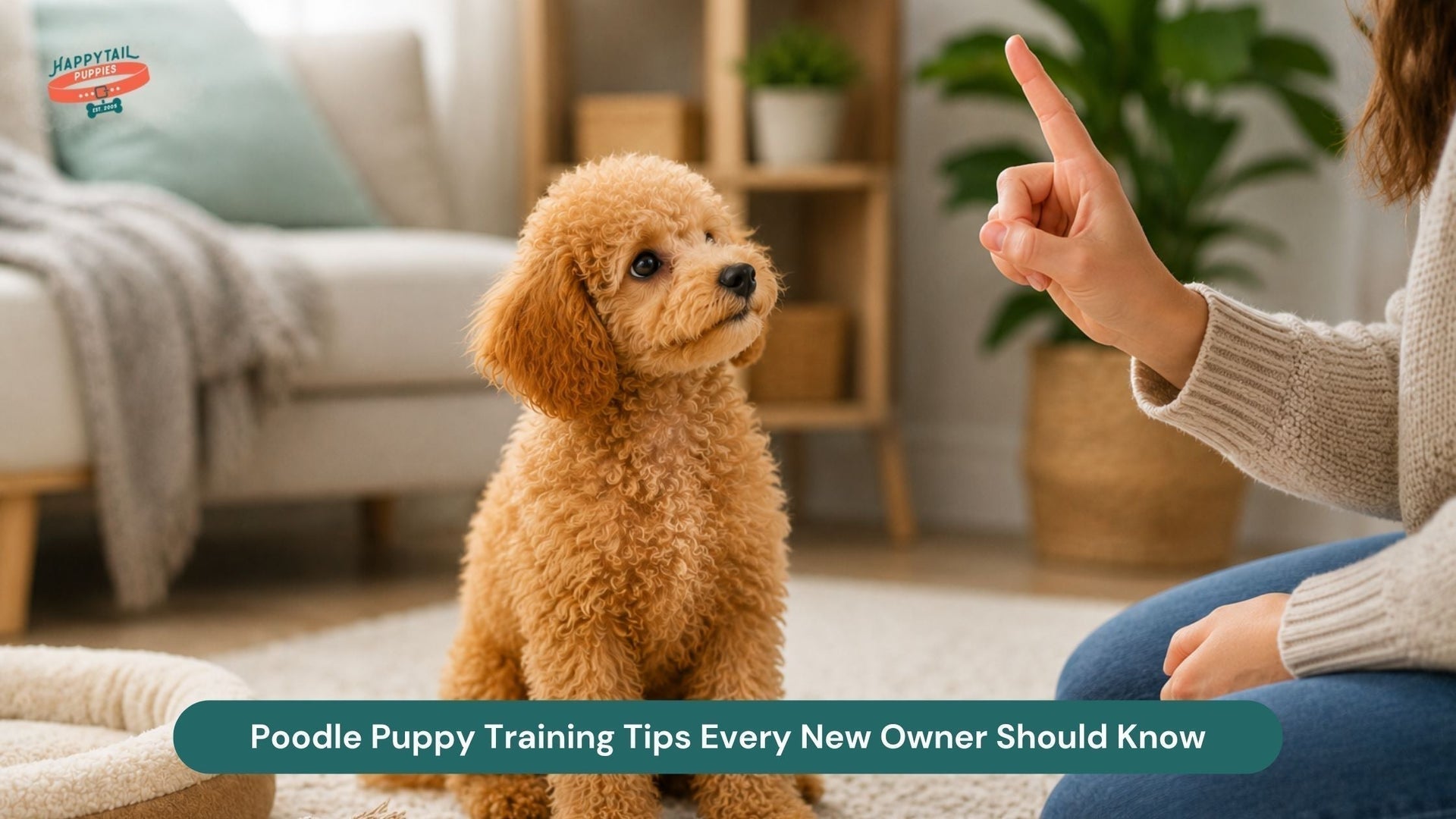
Poodle Puppy Training Tips Every New Owner Should Know
🐾 Table of Contents
- Start Training From Day One
- Establish a Consistent Daily Routine
- Use Positive Reinforcement Techniques
- Focus on Early Socialization
- Make Potty Training a Priority
- Teach Basic Commands Early
- Prevent Jumping and Nipping Habits
- Keep Mental Stimulation a Priority
- Introduce Grooming During Training
- Avoid Overtraining Your Puppy
- Practice Leash Training Early
- Build Trust Through Patience
- Conclusion
Welcoming a Poodle puppy home is a joyous event with some fun, cuddling, and lots of learning. Poodles are also very intelligent, energetic, and affectionate dogs, which is to be expected when trained correctly. But early training, with regular routines, is key to raising a well-behaved puppy!
Puppy behavior tends to get established very quickly, and new owners often don't realize this. If you teach good behavior from the start, you will find that it transitions smoothly into adulthood, and you will find it easier to develop a connection with your pet. Useful puppy training tips to help you make your Teacup Poodle puppy a happy and well-behaved dog.
Start Training From Day One
Poodle puppies are learning quickly during the first few months of their life. Simple lessons learned early can have a long-term impact on behavior. Concentrate on basic instructions and habits right away after you bring your puppy home. Training should continue to be gentle, rewarding, and consistent.
Early learning activities should encompass:
- Responding to their name
- Knowing where to go to sleep
- Understanding feeding schedules
- Beginning potty training
- Calm indoor behavior
Whether your puppy succeeds in learning a command instantly, it takes a lot of repetition to learn it over time.
Establish a Consistent Daily Routine
Poodles like routine and routine solely. Consistency provides less confusion, less anxiety, and more training success.
Establish regularly:
- Meals
- Walks
- Bathroom breaks
- Play sessions
- Nap times
- Training exercises
Regular feeding times, supervised play time, and needed rest periods are also part of proper Teacup Poodle care.
Use Positive Reinforcement Techniques
The most effective way to train Poodle puppies is to use positive reinforcement. Poodles are “all ears” and reward-driven, making them highly susceptible to praise and rewards.
Immediate reinforcement for desired behavior for:
- Small training treats
- Verbal praise
- Gentle petting
- Favorite toys
Do not use punishment training techniques. Too harsh discipline can lead to fear and confusion, and this can lead to a loss of trust between you and your puppy.
Rather than correcting the error, refocus the puppy's attention and praise him or her after he or she has performed correctly.
Focus on Early Socialization
Puppyhood is an important time for socialization. If it's done right, your Poodle will be exposed to things without being scared.
Gradually introduce your puppy to:
- Different people
- Friendly dogs
- Household noises
- Car rides
- Grooming tools
- Outdoor environments
Positive experiences during social interactions help mitigate the risk of fear-based aggression and anxiety later in childhood.
Avoid overstimulating your puppy in interactions when it is learning, and supervise them.
Make Potty Training a Priority
One of the initial difficulties that all puppy owners encounter is house training. Poodles are smart dogs, and accidents happen as a part of learning.
Consistency and patience are key elements of successful potty training.
Here are some potty training tips that can help you:
- Taking your puppy outside frequently
- Using the same bathroom spot
- Positive reinforcement of successful outdoor toilet visits
- Being alert for symptoms such as sniffing or circling
- Restricting indoor freedom, not under surveillance, in the initial stages
Most pups require an elimination opportunity after a meal, a nap, and after physical play. Crate training can also help with house training by promoting bladder control and a safe sleep space.
Teach Basic Commands Early
Obedience training offers structure and aids communication between you and your poodle puppy. Introduce short sessions (1-5 minutes) with one command per session.
Here are some of the most basic commands you should know as a beginner:
- Sit
- Stay
- Come
- Down
- Leave it
- Heel
Do not exceed 5-10 minutes for a training session, as this will be too much for your puppy. It is better to have several sessions throughout the day that are shorter than long sessions.
Praise your puppy with enthusiasm when it does something right.
Prevent Jumping and Nipping Habits
Poodle puppies tend to overexcite during play. If not corrected, playful behaviors such as jumping and nipping can become chronic issues.
To discourage jumping:
- Ignore attention-seeking jumps
- Reward calm greetings
- Request visitors to be consistent
To stop nipping:
- Ensure chewing is directed onto safe toys
- If the biting persists, shorten the end play for a few seconds
- Don't engage in rough play that might encourage mouthing
If your puppy learns to bite inhibition early, he will have a better understanding of what to do with humans.
Keep Mental Stimulation a Priority
Poodles are exceedingly clever, and clever they must be with greyhounds because they need to be mentally stimulated as well as physically exercised. Puppies that are bored may be more likely to chew furniture or bark a lot.
Mental stimulation may involve:
- Puzzle toys
- Scent games
- Obedience practice
- Interactive feeding toys
- Hide-and-seek activities
After you become a new puppy owner, toys and games that challenge your dog and teach it how to play by the rules, along with enrichment activities, could be combined with the regular Teacup Poodle costs. However, their high energy levels make them extremely prone to becoming unbalanced and, if not stimulated, in a bad way.
Thinking About Getting a Poodle? Know the Real Costs First 💰🐩
From Toy and Miniature to Standard Poodles, purchase prices can vary significantly based on size, breeder, pedigree, and location. Learn what influences the cost of a Poodle and explore the additional expenses every future owner should plan for before bringing one home.
Read the Complete Poodle Price GuideIntroduce Grooming During Training
Poodles should be groomed continuously throughout their lives. Introducing puppies to regular maintenance grooming, nail clipping, and brushing.
Groom gently regularly:
- Hands have a calming approach to touching ears and paws
- Daily grooming of the dog's coat
- Gradually introducing nail clippers
-
Rewarding relaxed behavior
Puppies raised to adulthood on the basis of short positive experiences of grooming will not object to or fear grooming. Owners need to explore several Poodle haircut styles from an early age to ensure the grooming options are suitable for the dog's coat type and intended use.
Avoid Overtraining Your Puppy
As a puppy owner, it's easy to overdo it when the excitement of obtaining a new dog arrives. Poodles are keen to learn but must have rest and play time too.
If it happens that your puppy is overstimulated and is showing signs, these are:
- Ignoring commands
- Excessive barking
- Zoomies indoors
- Frustration behaviors
- Severe forgetfulness
If your puppy has training before they're tired or distracted, make it a positive experience. Learning is fun and effective when it is structured.
Practice Leash Training Early
Training a puppy to walk politely on the leash is a behavior that must be taught, especially when the puppy is an active, exploring breed. Start on the leash indoors or in quieter outdoor areas, and work your way up to busier areas.
Thankfully, there are certain methods of leash training that include:
- Fitting light puppy leashes
- Rewarding loose-leashed behavior
- Stop as soon as you pull them
- Include eye contact points during walks
Patience is a key point at this stage, as is being steadfast. Puppies investigate by smelling, hearing, and moving. Gradually work on leash confidence through regular and short walks.
Build Trust Through Patience
All puppies have different learning speeds. Other commands may take days to repeat, and some will take weeks. Any training must be built on a solid understanding of your relationship with your Poodle, not create stress.
American Pet Products Association (APPA) data indicate that U.S. pet industry national spending will continue to grow into a larger category through the first of this year, reflecting greater pet owners' spending on their pets' training, grooming, nutrition, and health and wellbeing care.
The following are important for you to remember:
- Be patient, if you have a setback
- Celebrate small successes
- Maintain a speak-to-teach tone
- Avoid unrealistic expectations
When you do have a positive setting, it will keep your puppy happy and interested in learning.
Conclusion
Puppy training is just as important as puppy help, consistency, tenderness, and direction. When well acclimated to healthy habits, they're clever, motivated to learn, and may become training partners. House training, socialization, obedience training, and grooming are all stages that help develop your puppy's confidence and behavior in the future.
By creating consistency and rewarding good behavior, a well-trained Poodle can be a good house pet and companion in a family. With consistent and dedicated practice and approach, you can have a loyal, loving, well-trained pet for years down the road.
Frequently Asked Questions
How long does it take to train a Poodle puppy?
Most Poodles are able to learn basic obedience within a matter of a few weeks with consistency, patience, positive reinforcement, and daily training.
Are Poodles easier to train than other dog breeds?
Yes, Poodles are very intelligent animals, which learn commands, routine, and reward training quickly and effectively.
At what age should Poodle puppy training begin?
In general, training should be started as soon as you bring your puppy home, ideally starting around 8-weeks of age.
Related Articles: