

Complete Havapoo Care Guide for First-Time Owners
🐾 Table of Contents
Across the United States, there has been a recent rise in designer dog breeds. And the Havapoo, a crossbreed between the Havanese and the Poodle, sits near the top of that trend for small-breed companions. This blend of smartness, manageable energy, and a low-shedding coat is why so many first-time dog owners are captivated by this breed.
So, before you plan to bring one home, it helps to understand what daily life with a Havapoo looks like in reality. Their grooming needs, temperament quirks, and exercise requirements are shaped by their mixed heritage. And getting ahead on those details makes the first year extremely manageable when owning a Teacup Havapoo puppy. In today's post, we are going to go over every detail new Havapoo owners should know.
What Is a Havapoo?
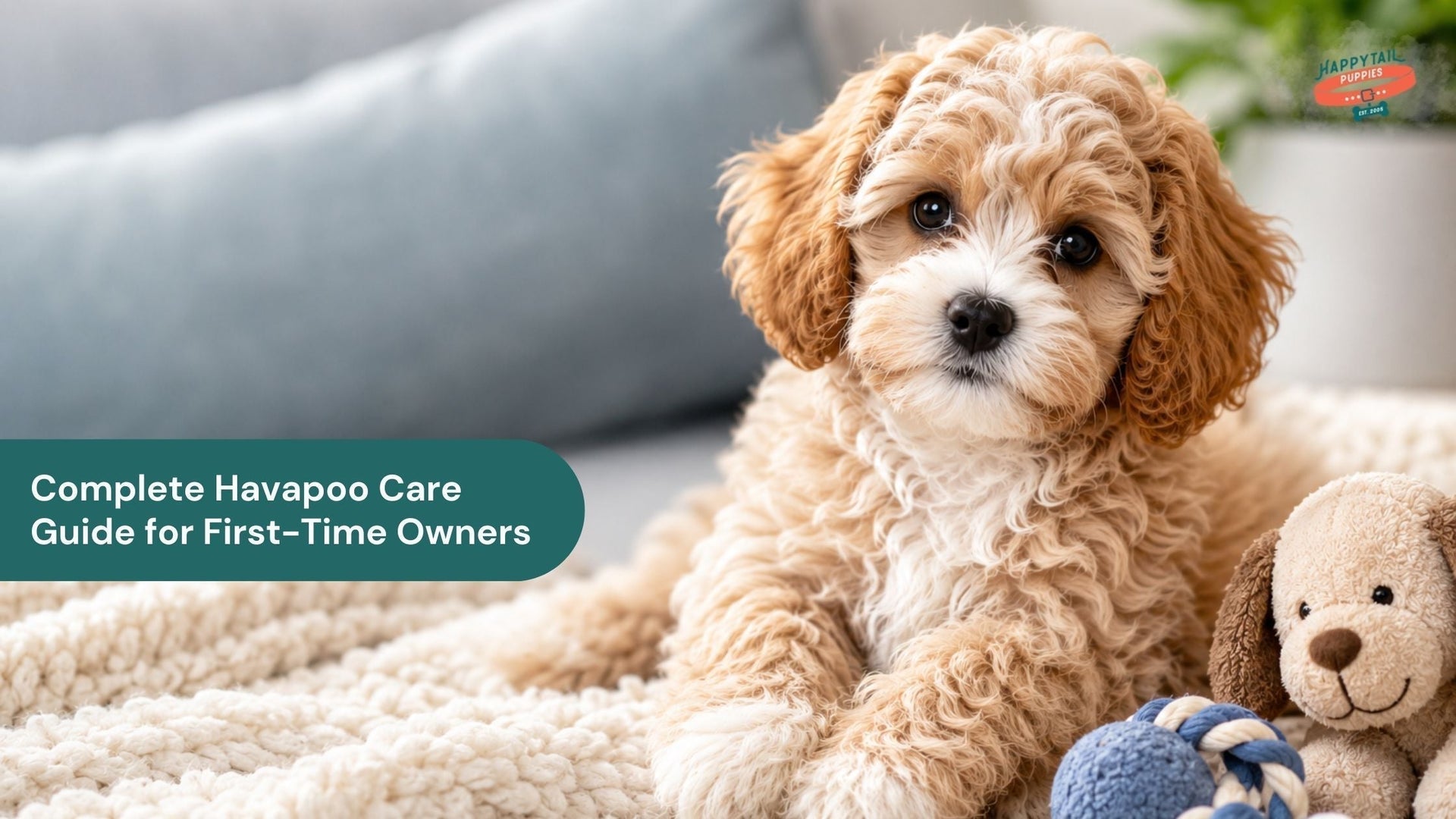
A Havapoo is also known as a Havadoodle or Poovanese. A cross between a Havanese and a Miniature or Toy Poodle. These pups are prized for their loving temperament, compact size, and low-shedding coats.
Havapoo at a Glance
- They generally stand at 8–15 inches tall
- Weighs around 7–20 pounds
- Lifespan is typically around 12–15 years
- Coat Type is Wavy, curly, or straight
- Temperament is extremely friendly, intelligent, and affectionate
- Energy levels are moderate
- They are extremely good with Kids
- Highly apartment-friendly
Their jovial personality and manageable size make them the perfect choice for first-time dog owners.
Caring for a Havapoo Starts With Understanding Its Mixed Heritage
A Havapoo doesn’t inherit equal traits from both parents. So, each dog is different, and the level of care should be aligned to fit their individual requirement.
Coat Type and Grooming Needs
The Havapoo coat type is somewhere between the silkiness of the Havanese and the curl of a Poodle. Owners who compare a Teacup Havanese and a Standard Havapoo often find the smaller parent line produces a silkier, finer texture that mats smoothly. Professional trims every six to eight weeks will round out a manageable grooming routine for this breed.
Brushing Schedule Basics:
- Brush two to three times weekly
- Use a slicker brush for curls
- Check behind the ears often
- Trim professionally every 6-8 weeks
Coat texture often varies within the same litter. Therefore, the brushing tools and frequency should be aligned to match each dog’s actual hair type.
Grooming Tools and Home Setup Essentials
The proper tools should be available upfront. This will make it easier to provide consistent care, and an adequate pet grooming kit will help prevent a scramble after tangling or matting occurs. Time and stress can be saved with a couple of strategic decisions in advance.
Essential Supplies List:
- A brush and a metal comb made for slicking hair
- Dog safe shampoo and conditioner
- Nail clippers or a grinder
-
Comfortable crate or dog bed
Setting up a specific grooming area at home can make it easier to get used to regular brushing.
Exercise and Activity Requirements
A Havapoo enjoys daily exercise, as does the Havavoo. This is where the difference between the Havapoo and the Havanese comes into play. The purebred Havapoo usually requires more activity than its more sedate Poodle-based cousin. This balance will work pretty well whether you live on the ground floor or in a house with more space for pets.
Daily Movement Targets:
- Two short walks daily
- Add fetch or tug play
- Mix in puzzle feeders
- Avoid long unsupervised yard time
If a dog is wasting all their energy on unstructured activities, they will revert to problematic behaviors, like chewing or barking.
Nutrition and Feeding Guidelines
It is important to focus on a Havapoo’s weight since their small stature carries excess pounds poorly. This is equally essential for senior dog care and nutrition after age 7, when slower metabolisms require adjusted portions and joint-supportive ingredients. Portion control, along with quality protein sources, can support long-term joint and energy health.
Feeding Fundamentals:
- Measure portions precisely
- Choose age-appropriate formulas
- Limit treats to 10%
-
Transition foods gradually
One of the most frequent causes of gastrointestinal upset is a sudden change, which should always happen over time.
Training and Socialization Approach
Early socialization is equally important, as it determines how a Havapoo can handle new people, pets, and places for the rest of its life. Reward-based training works best for a pup, since this breed responds poorly to harsh correction.
Core Training Priorities:
- Start crate training early
- Use treats and praise
- Exposure to varied environments
- Keep sessions short and upbeat
This socialization period is a delicate and narrow window in early puppyhood—this is when it counts most!
Common Health Issues
Havapoos are generally healthy but may be predisposed to certain conditions inherited from their parent breeds.
Common issues are:
Patellar Luxation
This is when the kneecap is dislocated.
Symptoms include:
- Limping
- Skipping while walking
- Difficulty jumping
Progressive Retinal Atrophy (PRA)
A kind of inherited eye disease that may cause vision loss as time goes on. Getting routine eye exams can help identify issues before they become critical.
Hip Dysplasia
Although this condition is common across bigger breeds, some Havapoos may also develop hip issues. So, maintaining a healthy weight can help reduce stress on their joints.
Allergies
Havapoos may experience:
- Food allergies
- Environmental allergies
- Skin sensitivities
The Merck Veterinary Manual states that up to 10% of dogs develop atopic dermatitis, and itching, ear infections, and a good deal of licking are no laughing matter.
Symptoms are itching, ear infections, and increased licking.
Preventive Care Checklist
Schedule:
- Annual wellness exams
- Vaccinations
- Parasite prevention
- Dental checkups
- Routine blood work for senior dogs
Regular veterinary care can make a huge difference in your pet's life.
Final Thoughts
When you adopt a Havapoo, you are adding a dog bred for companionship, curiosity, and family bonding. More first owners are finding that this quirky-looking cross can thrive in a variety of homes and lifestyles, and that word-of-mouth isn't dying down.
Few owners realize what wonderful rewards the entire experience brings when they go in with that knowledge, and with far less guesswork.
Frequently Asked Questions
What's the average adult weight for a Havapoo?
The size of adult Havapoos depends on the Poodle parent, so the size of a Havapoo can range from 7 to 20 pounds.
Are Havapoos suitable family dogs for a small family?
Yes, Havapoos are generally good with children, but you will need to supervise them, as small dogs can be clumsy and hurt when handled roughly.
Will Havapoos tolerate being left alone during work hours?
Not for a prolonged period. With proper socialization, havapoos can form strong family bonds and learn habits such as excessive barking due to anxiety when left alone for too long.
Would a Havapoo make a good allergy-friendly dog?
Havapoos shed very little because of their Poodle coat, but none are hypoallergenic, so it's best to spend time familiarizing yourself with one first.
At what age will a Havapoo be fully house-trained?
House training is achieved in most cases within the first several months with consistency, but can take differing lengths of time, of course, depending on temperament and routine.