
Dog Hair vs. Fur: What's the Difference and Why Does It Matter?
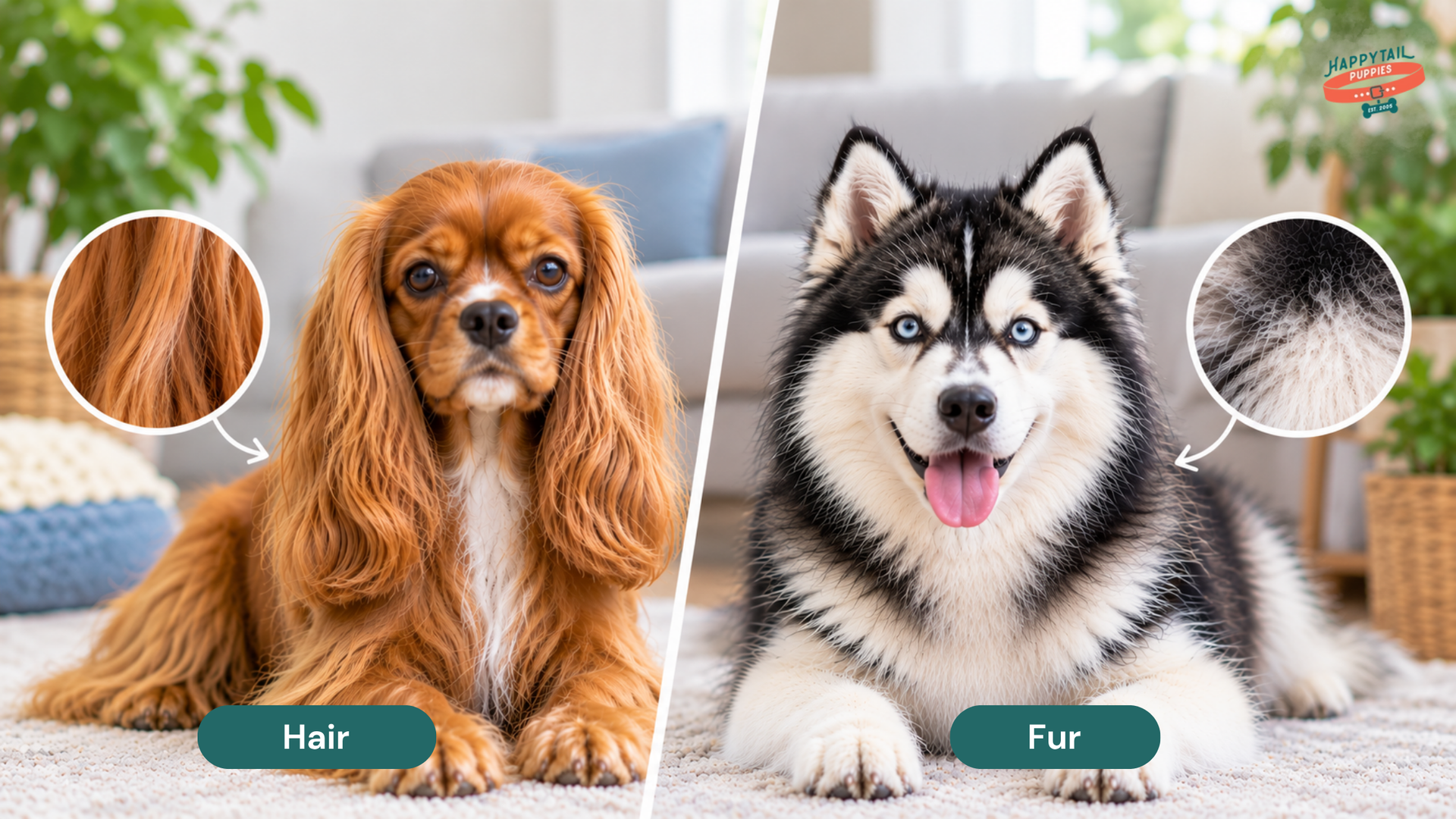
Dog hair and fur are made from the same protein, keratin, but they can differ in how they grow, shed, and feel. Understanding these differences can help dog owners choose the right grooming routine, manage shedding, and better understand how coat type relates to allergies and everyday care.
⚡Quick Answer
Dog hair and fur are both made of keratin, but they can differ in growth cycles, texture, and shedding patterns. These differences can affect grooming needs, shedding, and how much maintenance a dog’s coat requires.
Most dog owners use the terms “hair” and “fur” without much thought about whether there is a real difference. Since both terms describe the coat that grows on a pup, it is easy to treat them as the same. However, the real difference lies in how the strands grow and shed over time.
Understanding the difference can explain a couple of common things. Some breeds, like a Teacup Maltese, shed very little, while others, like a Teacup Chihuahua, shed much more, mainly during certain seasons. Grooming needs also vary by breed. “Hypoallergenic” is another term dog owners often misunderstand.
So, in our guide today, we will discuss everything about the core differences between dog hair and fur to help you get a better idea.
🐾At a Glance
- Hair and fur come from the same protein
- The real difference is in how they grow
- Fur usually sheds in seasonal bursts
- Hair sheds slowly and steadily
- Coat type affects how much grooming a dog needs
- Allergies are linked to dander and saliva, not coat type
Overview of Dog Fur and Dog Hair
Before looking at the differences in detail, here is a simple explanation of each type.
Fur grows in cycles. It grows for a while, rests, then falls out and starts again. Since many strands go through this cycle around the same time, fur often comes out in large amounts during certain seasons.
Hair grows more continuously. It does not rest for long, so it keeps getting longer until it is trimmed. This is close to how human hair grows.
Here is the short version:
- Fur grows in cycles and sheds heavily at certain times of the year
- Hair grows continuously and may need regular trims to maintain its length
- Both are made from the same protein, keratin
Even a small dog such as a Teacup Pomeranian sheds the way fur does, not the way hair does. Size does not decide coat type. Growth pattern does.
How to Tell If Your Dog Has Hair or Fur
Unsure whether your dog has hair or fur? Here are a couple of checks that can help you get sorted:
🐾Check how fast the coat grows
If it needs regular trims to stay short, it’s likely hair. If it stays about the same length on its own, it’s most likely fur.
🐾Check the shedding pattern
Fur mainly comes out in significant amounts during certain seasons. Hair sheds less at a time throughout the year.
🐾Check the texture
Fur feels fuller and coarser, while hair feels finer and is often identical to human hair.
The Real Difference Between Dog Hair & Fur
Speaking of chemical composition, both hair and fur are the same. The main difference comes from how each one grows and behaves.
How Coat Growth Cycles Differ
Every hair or fur strand goes through three stages. It grows, resets, and then falls out. The real difference between hair and fur is judged by how long each strand will stay in its growing stage.
In this stage, fur spends less time growing as it reaches a certain length, then rests and falls out. Hair continues to grow, which is why you may need to trim it regularly.
These growth stages influence a couple of things, such as:
- How long each strand grows
- How often a dog sheds
- How fine or thick it feels
This is why most hair-coated breeds need regular haircuts. It also helps you know how often to brush a dog, since faster-growing hair often tangles more quickly without regular brushing.
Density and Texture Set the Two Apart
Compared to hair, fur feels thicker and a bit rough. Hair feels smoother and finer, often resembling human hair more than any typical animal coat.
Here are a few points one should know:
- Fur feels fuller and thicker
- Hair typically feels smoother and silkier
- Separately, it’s tough to tell how much it sheds
A shiny, soft coat usually shows how healthy your dog’s skin is underneath. This relates to a dog's skin oil production, as these oils keep each strand conditioned right from the root to the tip.
How the Terms Get Mixed Up
Hair and fur are synonymous terms used by all professional groomers and veterinarians. Both are fine, and no scientific criterion distinguishes them. The only major difference is growth pattern.
Why is it easy to confuse these terms:
- There is no formal claim that distinguishes them
- In some cases, breed marketing will select the word that sounds better
- Both have origins in the same protein and have very different growth patterns
Since the difference is practical rather than technical, it may be easier to think of coats as two kinds. This is key to healthy dog skin and coat, and grooming needs to match their actual growth.
Why the Difference Actually Matters
In reality, understanding the difference between dog hair and fur can shape everyday decisions for dog owners.
Shedding Amount Comes Down to Coat Type
Dogs with a fur-type coat tend to shed seasonally, dropping their fluffy undercoat heavily a couple of times a year when the weather changes. Dogs with a hair-type coat tend to shed slowly and steadily, so you will find fewer loose hairs around the house.
What shapes shedding levels:
- The type and structure of a coat
- Seasonal fluctuations in temperature
- Total wellness and food intake
The seasonal shedding pattern explains why some dogs seem to shed constantly for a few weeks and then hardly at all for the rest of the year.
Grooming Needs Look Completely Different
Fur-coated dogs mainly need regular brushing to remove loose fur and prevent matting during shedding season. They will rarely need haircuts since their fur manages its own length. Hair-coated dogs, however, have different needs. Each strand keeps growing, so they need regular trims to keep it manageable, along with daily brushing to prevent tangles.
What each coat type usually needs:
- Fur coats need frequent brushing as well as occasional trims
- Hair coats need regular haircuts or daily brushing
- Both in the form of routine bathing and skin checks
- Matching the grooming routine to the coat type saves both the dog and the person holding the brush a lot of frustration.
Allergies Aren't Really About Hair or Fur
A dog with hair instead of fur is often thought of as a safer choice for people with allergies, but that is not always the case. Most canine allergies have little to do with a dog's coat type.
A few things that trigger allergies:
- Proteins in dog dander
- Proteins present in a dog’s saliva
- Proteins in urine, although in smaller amounts
Coat type mainly impacts how noticeable shedding is around the house. However, a dog who sheds less can still expose people to certain allergens.
🐾What the Research Actually Shows
According to the American College of Allergy, Asthma and Immunology, longer hair in certain dog breeds does not mean less allergy potential. Also, allergen levels are usually the same across dog breeds. Proteins in dander, saliva, and urine are the real culprits, not the hair, fur, or feathers.
Simple Tips to Manage Shedding at Home
Dog owners can follow a few simple routines to make shedding easier to manage, regardless of coat type.
Here’s what to include in your routine:
- Maintain a regular schedule to brush your dog, not when you notice loose fur around your home
- Use a dog-friendly brush suited to the coat type since hair and fur respond differently to each grooming tool
- Regular baths support healthy skin and remove loose hair and dander.
- Feed a well-portioned diet rich in protein and healthy fats that supports coat condition
- Consult a vet if shedding unexpectedly increases, since this might be a health issue
- These proactive steps might not stop shedding entirely. But these simple tips can help keep it under control.
Closing Thoughts
Understanding growth cycles and shedding will help you make smaller, realistic decisions. This includes choosing the right grooming tools, setting a schedule, and knowing what to expect during different seasons. The main thing to know about coat type is that it has more to do with how it grows than how it looks, and once you understand this, caring for your dog will be much easier.
Frequently Asked Questions
Is dog hair the same as dog fur?
Yes, it is. Both dog hair and fur comprise the same protein, keratin. The only difference is their growth and shedding cycles.
Does a dog's coat change over time?
Certainly! Most dogs have a soft coat as puppies. This coat gradually transitions to a thicker, coarser adult coat during the dog's first year of life.
Do dogs with hair shed less than dogs with fur?
Dogs with hair shed considerably less compared to dogs with fur. Hair will shed slowly all year long, while fur falls out heavily during certain seasons.
Why does my dog shed more during certain seasons?
Generally, seasonal shedding occurs because of changes in daylight and temperature. Dogs with heavy fur shed more, which prepares them for warmer and colder weather.
Are dogs with hair instead of fur better for people with allergies?
Not really, since allergies are caused by proteins in a dog's dander and saliva. Coat type mainly changes how visible shedding is, not how many allergens are released.