

Golden Retriever Coat Care: Grooming Tips for a Healthy, Shiny Coat
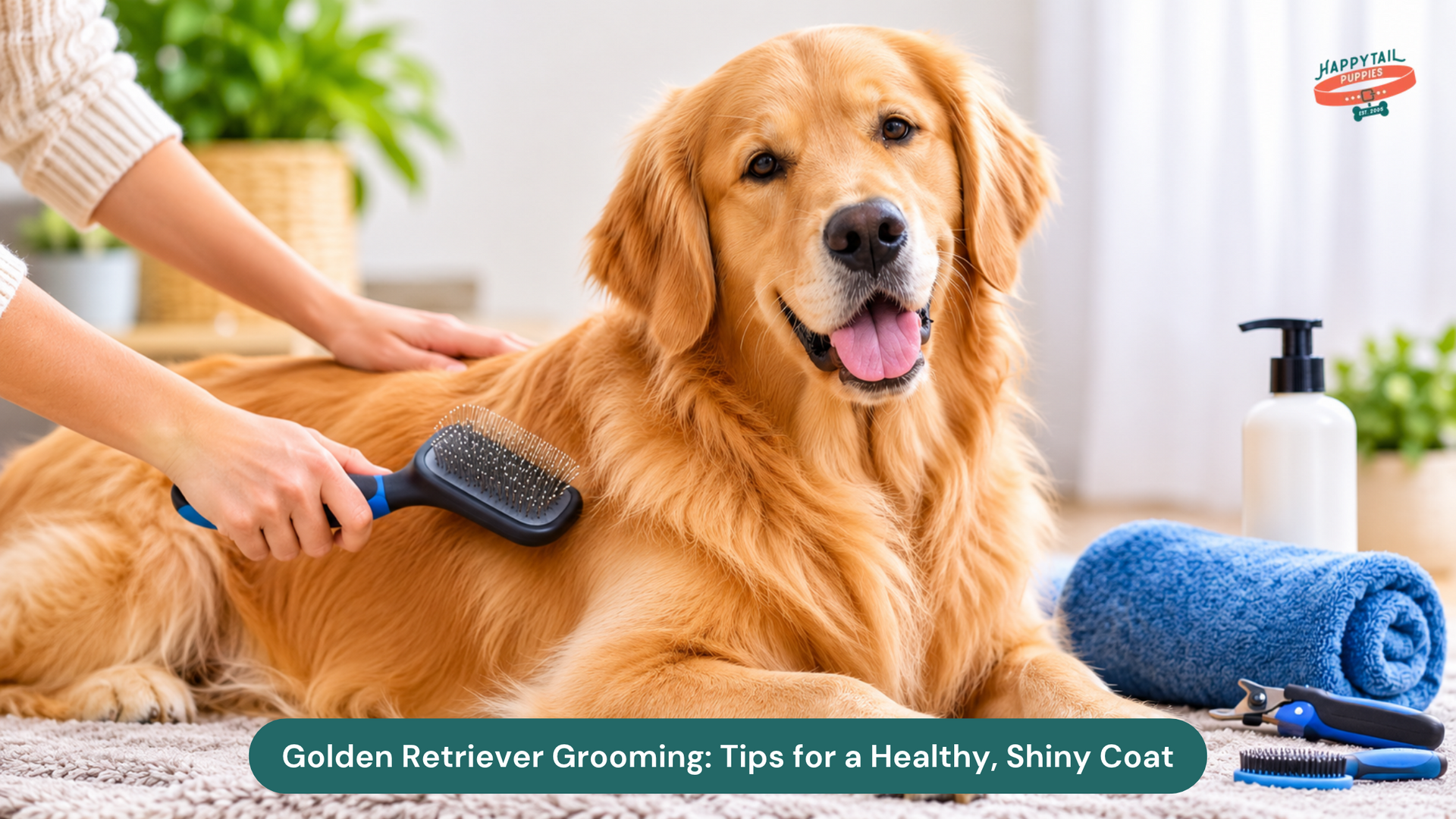
Keep your Golden Retriever’s coat healthy, shiny, and tangle-free with simple grooming tips. Find out how to brush, bathe, dry, and manage shedding while maintaining a beautiful double coat.
⚡Quick Answer
Golden Retrievers need regular grooming to keep their double coat healthy, shiny, and free of mats. Brush their coat several times a week, bathe them when needed using a gentle dog shampoo, and dry thoroughly after each bath. Regular ear checks, nail trimming, and teeth brushing also help maintain their overall hygiene and comfort.
A Golden Retriever's attractive coat looks easy to manage, but it has two layers. A dense, soft undercoat keeps the dog warm, and a longer outer coat repels dirt and water. The dog also has feathered hair on its legs, chest, and tail, which creates the breed’s famous flowing look.
Most owners are surprised by how much hair this breed sheds, how easily the feathered hair tangles, and how quickly a shiny coat can start to look dull. So, understanding the real cause makes each change easier to manage, whether you're grooming an adult dog or a Golden Retriever puppy growing into its fluffy adult look.
Understanding the Golden Retriever Coat
Good coat care for a Golden Retriever begins with understanding how their coat is built. Two features shape every grooming decision.
🐾 The Double-Layered Structure
The Golden Retriever has a soft, dense undercoat that insulates and a longer, water-repellent outer coat that protects against dirt and moisture. Together, both layers shed naturally and need regular brushing to keep the dog comfortable in all weather conditions.
How each layer works:
- An undercoat for soft seasonal insulation
- Outer coat to repel water
- Both layers shed naturally
Since each layer has its own job, never cut the coat short. This can affect how well it protects your dog from heat and cold.
🐾 Feathering and Tangle-Prone Areas
These dogs have long, soft feathered hair on their belly, chest, legs, and tail. These areas are constantly in motion, rub against their body surface, and start to collect debris. This makes them the most common places for tangles to form.
Check for tangles in:
- Behind their ears and neck
- Chest, belly, and armpits
-
Feathered tail and legs
Check these hot spots first during each brushing session. Then slowly work out smaller knots with your fingers or a dog-friendly comb before they turn into mats.
Your Weekly Grooming Routine
The following Golden Retriever grooming tips will help you set a schedule that’s easy to maintain even if you have a busy household or work routine. Adjust it based on your dog’s coat, lifestyle and overall health.
| Grooming Task | Frequency or How Often |
|---|---|
| Brushing | Several times a week |
| Bathing | Every 6 to 8 weeks, or when dirty |
| Drying | After every bath |
| Ear inspection | Weekly |
| Nail trimming | Every 3 to 4 weeks |
| Teeth brushing | Daily or several times weekly |
Keep treats handy while you groom your dog; a muddy, active dog will need frequent baths.
A Step-by-Step Home Grooming Guide
Here’s how to groom a Golden Retriever at home. Keep a slow pace and praise your dog often.
🐾 Brush Before You Bathe
Start the grooming routine with brushing to remove your dog’s loose undercoat and tangles before water turns them into mats. Work section by section from the skin outward. Also use a dog-friendly slicker brush, an undercoat rake and a comb in that order.
How to maintain brushing sequence:
- The slicker brush can be used through each section
- The undercoat rake can be brushed along the body
- Comb through feathering
Finally, brush again with a comb to find any leftover tangles. If you find any, then go back to those areas and stop immediately if your dog appears sore or uncomfortable.
🐾 Bathe and Rinse Thoroughly
Whenever you bathe your dog, make use of lukewarm water and a dog-friendly shampoo. Work the lather down to their skin and rinse thoroughly till all the soap is gone. This matters because leftover shampoo can irritate your dog and make their fur look dull.
A checklist for your dog’s bathing day:
- Wet the coat thoroughly
- Gently lather down to the skin
- Rinse till water runs clear, free of soap or lather
Since the thick double coat can hold soap and water, it takes extra time to rinse their chest, armpits, and feathering, where shampoo can easily be missed.
🐾 Dry the Double Coat Completely
Drying is as important as washing. Damp fur that rubs against your dog’s skin can cause irritation and odor. Use a towel to press out extra water and dry their coat all the way down to their skin and undercoat.
Here are a few things to try:
- Press a soft towel against your dog’s body to remove extra water
- Use a cool air dryer to dry your dog’s coat completely
- Brush gently while you’re drying your dog’s coat
Before the last process, press your hands against their thicker coat areas, mainly behind your dog’s ears and under their legs, to check for lumps. These areas also stay damp for a long time and are easy to overlook.
🐾 Trim Feathers and Tidy Paws
A gentle, lighter trim can maintain your dog’s natural look while keeping them comfortable. Include clearing stray hair around their paws, the back of their legs, and the tail in the routine. Also, don't cut their main coat short or shave it.
Areas that need light trimming are:
- Existing hair between the paw pads
- Back of the front legs
- Tail and rear feathering
Most owners should also check out the latest dog grooming trends. However, a Golden Retriever’s feathering often looks best when you only clear it out. Keep trims lighter, and ask a professional groomer for help if needed.
🐾 Finish With Nails, Ears, and Teeth
A thorough grooming schedule includes care beyond their coat. Trim their nails whenever you hear a clicking sound on the floor when your dog walks, check their ears for redness or odor, and brush their teeth regularly to keep their gums healthy and their breath fresh.
Final areas to finish with:
- Trim their nails in smaller amounts
- Look inside their ears for signs of redness
- Brush their teeth with dog-safe toothpaste
Also, reward your dog with a treat or praise. This way, after each grooming step, your dog feels positive, and the next session becomes easier for both of you.
🐾 What does the Latest Data Shows
According to the latest data shared by the American Kennel Club (AKC), the Golden Retriever ranked third among 202 breeds in 2026, the same spot as the year before. This helps explain why so many families choose this breed.
Managing Shedding and Common Coat Problems
Some coat-related issues are inevitable, even with great care. Here are two main concerns that most owners would ask about.
🐾 Seasonal Shedding
Golden Retriever shedding happens year-round. Shedding increases in spring and fall when their undercoat is replaced. Brushing during these periods can remove loose hair before it spreads across your furniture or floors.
Here are some ways to manage heavy shedding:
- Regular brushing during heavy shedding season
- Make use of an undercoat rake gently
- Keep a lint roller handy
If you're wondering how this dog’s smaller versions compare, an expert’s guidance can help you understand what to expect when you search for “Do Miniature Golden Retriever Shed”. This matters because every dog sheds differently.
🐾 Dull or Dry-Looking Fur
Golden's fur may begin to become shaggy. Over-bathing, harsh shampoos, improper drying, dry indoor air, and poor brushing are common owner-related mistakes. But brush care alone shouldn't cause dullness; if it does, your dog might be dealing with a health problem.
Here’s how to restore their lost shine:
- Brush your dog to spread skin oils across its body
- Use milder shampoos on dogs
- Avoid bathing if it is not necessary
Owners are responsible for maintaining healthy dog skin and coat. If the dullness lasts more than a couple of weeks, there may be a problem, so talk with an expert veterinarian.
How Does Coat Care Change With Age?
Matching coat care to your dog's stage of life is the best way to care for its coat.
🐾 Puppyhood
Schedule the first professional visit when your puppy is 12 weeks, so they get used to handling.
Try practicing short brushing sessions and gentle paw touches at home till your puppy feels relaxed. Also praise them and give small treats to make this routine something they will always look forward to.
🐾 Adulthood
Adult Goldens do best with a steady schedule and consistent grooming routines. Weekly brushing, monthly bathing, and regular ear checks can keep their coat and skin in top condition.
Adjust as needed; a dog that hikes or swims may need extra checks or rinsing.
🐾 Senior Years
Senior dogs will find longer grooming sessions tiring. Keep sessions short, use a soft brush and run your hands over their body to check for lumps.
Dry skin and thinner fur are common with age, so mention any changes at your next vet visit.
Common Grooming Mistakes to Avoid
A couple of small habits can silently damage your dog’s coat. So, watch for common mistakes and adjust or schedule grooming sessions accordingly.
Common mistakes to avoid are:
- Shaving their double coat
- Bathing often even if not required
- Brushing only their coat’s surface
- Skipping thorough coat drying
- Pulling too hard on tangles
Several of these common mistakes are easy to avoid with patience and gentle, consistent habits. So make necessary changes sooner to keep grooming sessions positive and calm.
When to See a Veterinarian
Most issues with your dog’s coat are simple to fix right at home. However, a few issues may need professional attention.
Signs to watch for:
- Skin infections or the presence of lumps
- Ear infections with persistent odor or redness
- Hot spots and continuous scratching
- Heavier matting that seems to return over and over again
- Patchy hair loss or presence of bald spots
Together, these signs can also point to simple causes. So, schedule vet visits instead of relying solely on guesswork.
Final Thoughts
A healthy, shiny coat comes from steady habits. Brush weekly, bathe lightly, dry well, and watch for changes. Good Golden Retriever grooming also gives you quiet time with your dog. Take each season as it comes, and ask your vet about anything unusual. Your Golden Retriever will not remember the perfect bath, but will remember the calm hands, the treats, and the time you spent together.
Frequently Asked Questions
What Is the Best Shampoo for a Golden Retriever?
Choose a gentle, dog-friendly shampoo. A de-shedding formula can also help during heavy shedding periods. If your dog has itchy or sensitive skin, ask your vet to recommend a suitable shampoo.
How Long Does Brushing a Golden Retriever Take?
A regular brushing session usually takes about 10 to 15 minutes. During heavy-shedding periods or when the coat has tangles, brushing may take longer, so plan a little extra time.
Are Golden Retrievers Hypoallergenic?
No, Golden Retrievers are not considered hypoallergenic because they shed throughout the year, with heavier shedding during seasonal changes. Families with allergies should spend time around the breed before bringing one home and consult their doctor for advice.
Why Does My Golden Retriever Smell After a Bath?
A damp undercoat or leftover shampoo can cause unpleasant smells after a bath. Rinse the coat thoroughly and dry it completely. If the smell persists or is accompanied by scratching, consult your vet.
Does Diet Affect a Golden Retriever's Coat?
Yes, diet plays an important role in skin and coat health. Feed your dog a complete, balanced diet to support a healthy coat. Consult your vet before adding supplements or changing your dog's food.