

How Big Do Miniature Sheepadoodles Get? Size, Weight & Growth Chart
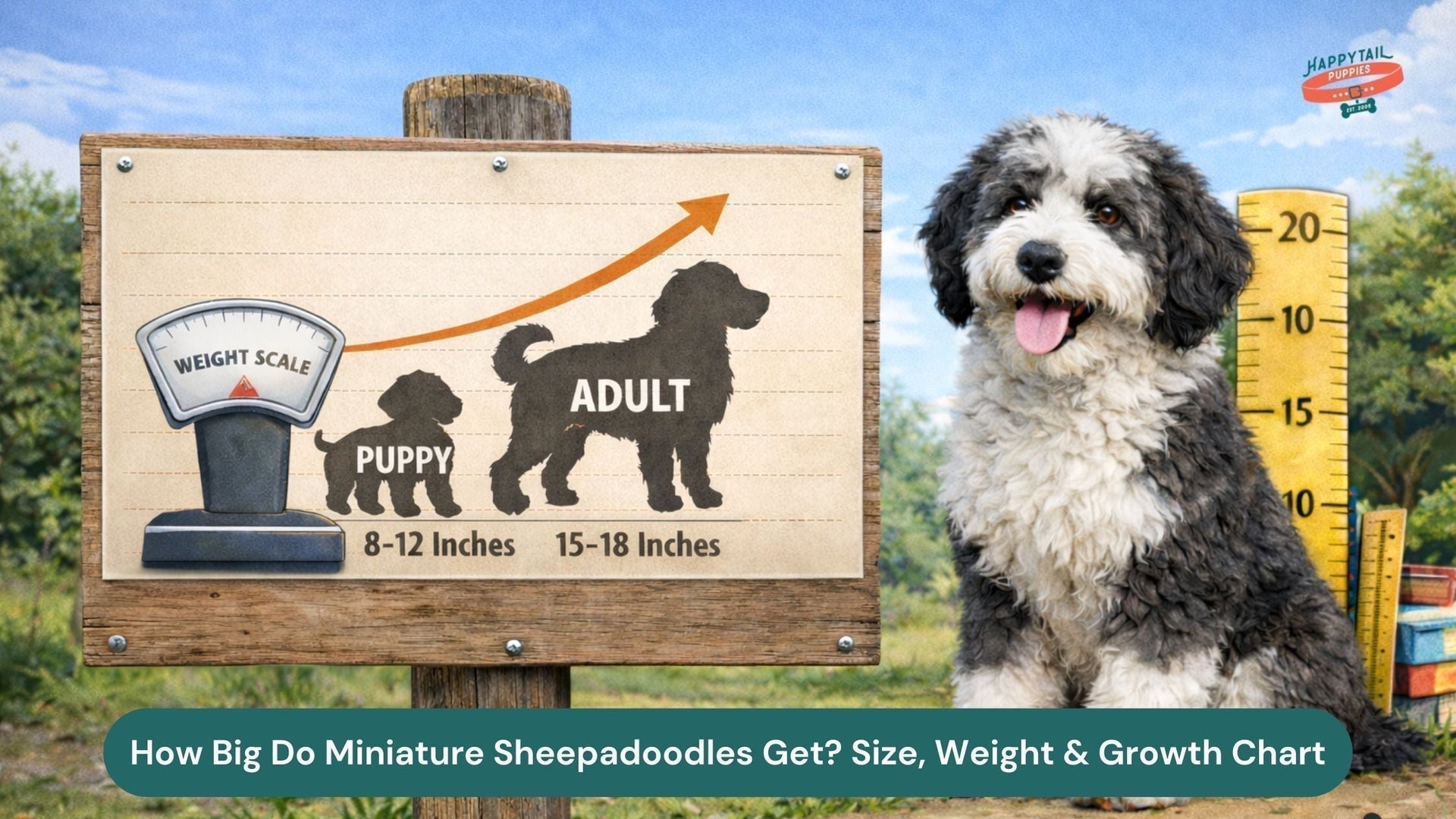
Miniature Sheepadoodles are popular for their teddy-bear look and pleasant temperament. Learn about their adult height, growth stages, and final size expectations.
🐾Table of Contents
- What Is a Miniature Sheepadoodle?
- Typical Size of Miniature Sheepadoodles
- Growth Timeline: What to Expect from Puppy to Adult
- Factors That Influence a Mini Sheepadoodle’s Size
- How to Estimate Your Puppy’s Adult Weight
- When Do Mini Sheepadoodles Stop Growing?
- Is a Mini Sheepadoodle the Right Size for You?
- Conclusion
Miniature Sheepadoodles are gaining popularity among dog lovers for their pleasant temperament, low shedding, and cute teddy-bear look. Although their personality can easily capture people's hearts at first sight, the question many potential owners have is: How big do Miniature Sheepadoodles get?
Their size may vary as they are a mixed breed; usually a cross between an Old English Sheepdog and a Miniature Poodle. This guide will break down the average size of Mini Sheepadoodles, their weight ranges, growth schedules, and what contributes to the size of your pup.
What Is a Miniature Sheepadoodle?
The Miniature Sheepadoodle is a hybrid breed, created by crossing a Miniature Poodle with an Old English Sheepdog. The outcome is a medium-sized, smart, affectionate breed that sheds little. Since Miniature Poodles are much smaller than Old English Sheepdogs, the puppies will be somewhere in the middle, a good fit for families that want a breed not too small or too large.
Mini Sheepadoodles are characterized by soft and wavy hair, high trainability, and playfulness. They have a moderate size, which makes them attractive to individuals who desire an active dog that can fit into most homes.
Typical Size of Miniature Sheepadoodles
Most Miniature Sheepadoodles weigh between 25 and 45 pounds. They are about 15 to 20 inches tall at the shoulder in height. This places them in the middle-range of dogs.
The breeding size, however, can differ depending on the parents and the breeding generation.
Size Variations
- Micro or Toy Sheepadoodles: These smaller variations are between 10 and 25 pounds. They are bred with a Toy Poodle and a Sheepadoodle, or bred by deliberately breeding smaller Miniature Sheepadoodles.
-
Moyen or Medium Sheepadoodles: They are similar but a little bigger, that is, around 40-55 pounds, and they are formed by crossing a Miniature Sheepadoodle with a small Standard Poodle or a bigger Mini Poodle.
In case a breeder does not specifically promote micro and medium sizes, the common Miniature Sheepadoodle will range between 25 and 45 pounds.
Growth Timeline: What to Expect from Puppy to Adult
Like most medium-sized breeds, Mini Sheepadoodles grow rapidly in the first six months. By approximately 10 months, most puppies have reached their full stature, even though they continue to fill out and develop muscle through 12-14 months. The following is the roughly approximate picture of what their development normally looks like:
- At 8 Weeks Old: The average weight of Mini Sheepadoodle puppies is 5 to 9 pounds, and they begin settling into their new homes as they continue to grow at a very high rate each week.
- At 3 Months Old: At a growth rate of 10 to 15 pounds, the puppies are developing energy as they grow, harden their bones, and begin initial training, which is shaping their future behavior. Most owners start comparing growth rates to those of other small designer breeds and, in particular, to those of breeds similar to them in temperament, like a teacup toy maltipoo.
- At 4 to 6 Months Old: The growth rate then increases markedly, as the majority of puppies gain 12-28 pounds and acquire a recognizable size and playful and energetic character.
- At 7 to 10 Months Old: Development slows as puppies reach adult height, when most weigh between 20 and 40 pounds and begin to fill out.
-
At 12 Months Old: At 25-45 pounds, most Mini Sheepadoodles are fully grown and have reached the final stage of muscular development and physical maturity.
Thinking a Mini Sheepadoodle Might Be Right for You?
Mini Sheepadoodles are loving, intelligent, and family-friendly companions. Explore their temperament, coat types, exercise needs, and available puppies to see if this adorable breed fits perfectly into your home and lifestyle.
🐶 Explore Mini Sheepadoodle PuppiesFactors That Influence a Mini Sheepadoodle’s Size
The final size of a Mini Sheepadoodle is contributed to by the combination of inherited characteristics, lifestyle, and the conditions that affect the Mini Sheepadoodle at the early stage of life. Being aware of these influences helps owners make the best predictions about successful growth and development.
Genetic Lineage
The genetic composition of a Mini Sheepadoodle is highly determinative of average size, influenced by parent breed ratios, inherited genetics, and generational differences. The larger or smaller size of the parent generally gives distinct results in the ultimate growth range and structure in each puppy. Hereditary size patterns are determined by a number of major factors:
- Parent breed proportions
- Generational influence
- Dominant genetic traits
- Recessive size markers
It is this genetic background that determines the anticipated range of growth, yet permits that there should be natural variation among individual members of a litter.
Gender Differences
Gender is a common factor in expected differences in size, with males generally developing slightly larger and heavier than females. It is also a phase when owners start introducing their sheepadoodle to other pets, and this may reveal differences in their confidence, playful behavior, and social maturity between girls and boys. Gender effects on growth tendencies are high:
- Male weight patterns
- Female size range
- Hormonal growth impacts
- Frame development pace
Gender-based patterns can help the owner more accurately determine the size of an adult and forecast feeding, exercise, and training plans based on the natural development plan.
Diet and Nutrition
A balanced and nutritious diet is of great importance in the steady and healthy development of the Mini Sheepadoodle. Correct nutrition helps build bone and muscle, supports metabolism, and ensures that puppies reach their genetic potential without unnecessary weight gain. Dietary habits have an impact on healthy well-being.
- Balanced daily meals
- Proper protein levels
- Controlled calorie intake
- Essential vitamin support
Correct nutrition supports sustainable development, promotes long-term health, and allows puppies to reach their projected adult size without preventable diet-related issues or defects.
Exercise and Activity Levels
Exercise helps build a healthy body by strengthening muscles, supporting metabolism, and helping prevent weight gain. The development is influenced by the level of activity in the following ways:
- Regular light exercise
- Structured play sessions
- Proper energy output
- Muscle-building movement
Regular exercise is healthy and supports proper physical growth and a healthy weight, as well as the optimal development of a Mini Sheepadoodle through puppyhood and early adulthood.
Health and Veterinary Care
Consistent veterinary attention promotes healthy, progressive growth in a Mini Sheepadoodle by detecting potential problems with size, diet, or growth state early. Timely treatment and preventive care contribute to optimal development at crucial stages of life. Veterinary control has an impact on development because it induces:
- Growth monitoring checks
- Preventative vaccinations
- Parasite management routines
- Health condition screening
The wellness trends report released by the American Veterinary Medical Association (AVMA) indicates that preventive veterinary checkups still play a major role in supporting healthy development in small dogs.
Breeding Practices
Mini Sheepadoodle breeding significantly affects the ultimate size. Good breeders make good choices for their parents and keep healthy breeds. The expectations regarding care and the miniature sheepadoodle cost in general depend on their practices as well. The impacts of breeding decisions on anticipated size are:
- Parent size selection
- Health screening protocols
- Controlled generational planning
- Reliable lineage records
Breeding practices have helped ensure that puppies grow to consistent, healthy body sizes, while also sustaining multi-generational health among Mini Sheepadoodles.
How to Estimate Your Puppy’s Adult Weight
Two approaches are commonly used to predict the adult size of medium-sized dog breeds such as Mini Sheepadoodles.
- The 16-Week Weight Formula: Divide the weight of your puppy at the age of 16 by 4. This gives a shaky idea of their mature weight. For example, when your puppy is 4 months old and weighs 12 pounds, their weight upon reaching adulthood will likely be 24 pounds.
-
The 75% Growth Rule: At the age of half a year, Mini Sheepadoodle will not have more than three-quarters of its adult weight. A six-month-old weighing 20 pounds will most likely have an adult weight of 26-30 pounds.
Recent reports by the American Kennel Club (AKC) emphasize that the growth potential of mixed-breeds is often erratic due to the fact that inherited characteristics may manifest themselves differently in every puppy.
When Do Mini Sheepadoodles Stop Growing?
The entire Miniature Sheepadoodle is full-grown at the age of nine to ten months. Body filling, weight gain, and muscle building normally proceed until an approximate of 12-14 months. Mini Sheepadoodles grow to be physically and, better still, behavior-wise, full-fledged by the age of 18 months.
Is a Mini Sheepadoodle the Right Size for You?
Mini Sheepadoodles can be used in families or by individuals who desire a loving, smart, and moderately sized dog. They are lightweight companions that can easily fit in apartments, as long as they get enough exercise. Due to their size, they are large enough to take part in active activities.
They are easy to adjust to various families and feel close to their families. This is one of the reasons they continue to gain popularity despite their manageable size.
Conclusion
Miniature Sheepadoodle generally weigh 25-45 pounds and are 15-20 inches tall when fully grown. Although genetics and lifestyle factors influence their ultimate size, the majority of Mini Sheepadoodles display typical developmental patterns. Knowing these patterns can help new owners anticipate what is coming as their puppy grows and also make adulthood healthier and happier.
Related Articles: