
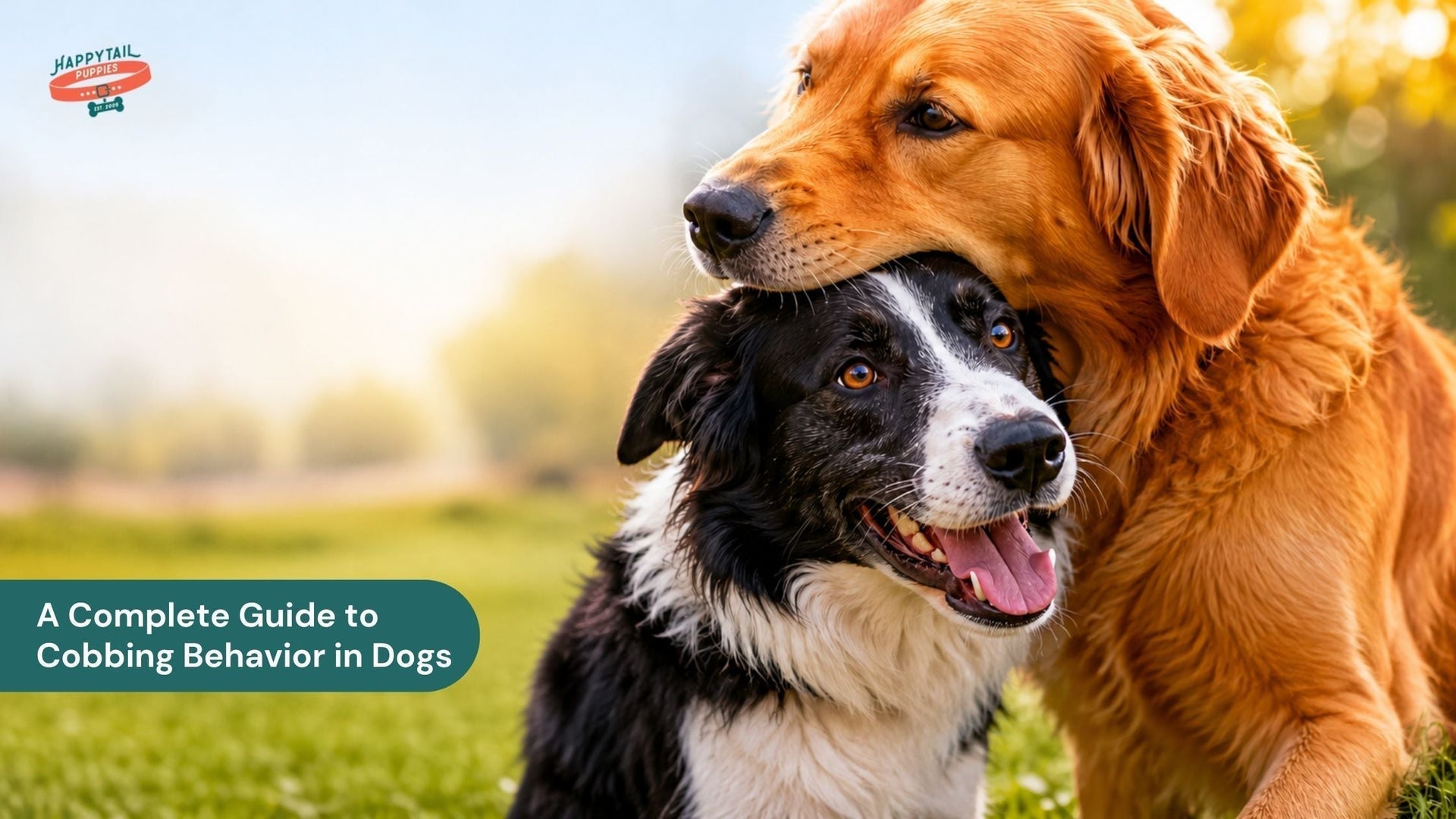
A Complete Guide to Cobbing Behavior in Dogs
⚡Quick Answer
Cobbing is a common dog behavior that involves gentle nibbling or mouthing, often directed toward people, other dogs, or objects. Understanding why dogs cob and what the behavior means can help owners respond appropriately and better understand their dog’s communication.
🐾 Table of Contents
Dogs communicate through all sorts of behaviors, from tail wagging and barking to more obscure actions that can leave any owner perplexed. One such behavior is cobbing, which manifests as gentle nibbling with the front teeth. When you see them doing it, you’ll wonder why your dog acts weird. Yes, many dogs behave like this when they want something. In fact, cobbing is quite normal dog behavior that helps to achieve something.
Knowing more about cobbing in dogs can help owners understand their dogs better, strengthen their bond, and tell when it is completely normal or when it requires a keen eye. Generally speaking, cobbing shows affection, comfort, or social interaction without any harm or injury.
What Is Cobbing in Dogs?
Cobbing is the act of a dog nibbling with its front teeth. Cobbing refers to soft, controlled behavior as opposed to biting, chewing, and mouthing. Many pet owners describe it as a dog lightly combing through the skin and clothes of a person, or a blanket, toy, or another pet.
The behavior is often identical to grooming actions noticeable among animals in social groups. Dogs use cobbing as a means of interacting with those they trust and feel comfortable around.
Things in common with cobbing include:
- A little nibble
- Never meant to hurt anyone
- Body language at ease
- Appearance of being calm or happy
-
Happens during bonding moments
Why Do Dogs Display Cobbing Behavior?
There are so many reasons why dogs bite, most of which stem from instinct and social behavior. Because dogs are very social animals, they look for ways to bond with their family, which can be canine or human.
Some of the more popular reasons include:
- Showing their love
- Bonds making strong
- Social grooming
- Joy and thrill
- Baby steps in self-soothing
Often, the context of the act of cobbing gives you a good indication of what the dog is trying to convey.
Affection and Social Bonding
One of the main reasons dogs lick is to show love. Dogs often lick people they care about, but they also sometimes gently nibble them as a sign of trust and companionship.
When your dog is comfortable and safe, cobbing can become part of your dog’s bonding ritual. For example, a Miniature Dachshund lying beside its owner may nibble the sleeve or a blanket to feel as close as possible.
Cobbing done out of love is indicated by:
- Gentle facial expressions
- Unstable body posture
- Softly wagging tail
- Looking for closeness
- A calm demeanor before and after cobbing
In such scenarios, the behavior is typically viewed as completely normal.
The Role of Natural Grooming Instincts
Cobbing is also linked to many of the grooming instincts dogs have inherited. In canine social groups, grooming helps to bolster social relationships and keep them clean.
Your dog could nibble softly like:
- Fur of another dog
- Locations with intriguing aromas
- Covers or linens
- Hands or arms of a human
These behaviors seem to occur without any signs of aggression or discomfort. In fact, it would be useful to observe cobbing along with other health indicators.
Excitement Can Trigger Cobbing
Many dogs bark when excited. When a dog feels a flood of positive emotions, it may bark as a way to release that energy.
You could encounter cobbing while:
- Coming back home after the exit
- Geared up for a walk
- Engaging with preferred playthings
-
Attention from family members
For instance, a Yorkshire Terrier may gently nibble a toy or blanket following a lively greeting by the owner. When it does happen, cobbing is usually a short-lived behavior and is accompanied by other signs of happiness.
Can Stress Cause Cobbing?
While we often think of the action of cobbing as a sign of happiness in dogs, some canines may resort to it as a response to minor stress or uncertainty.
Cobbing can happen due to stress:
- Daily tasks evolve
- People can visit the house
- Noisy sounds arise
- The dog has temporary anxiety
Dogs often repeat or show behaviors in self-soothing ways. Nevertheless, before assuming that cobbing is related to stress, owners should assess the full context.
According to data published by the American Veterinary Medical Association (AVMA), dogs are present in nearly half of U.S. homes. Understanding common canine behaviors and emotional responses is becoming increasingly important as more families welcome pets into their lives.
How to Differentiate Normal and Concerning Cobbing
The key to evaluating cobbing is observing the dog's overall body language and behavioral patterns.
Typically, a normal cob is:
- Gentle
- Occasional
- Relaxed
- Context-dependent
-
Easy to interrupt
The cobbing may be worrying when it is:
- Too much
- Obsessive
- With anxiety
- Associated with bodily distress
- Happening more often with time
Successful interpretation often arises from understanding your pet’s emotions and the situation in which the behavior occurred, rather than the behavior itself.
When Should Owners Be Concerned?
Cobbed is usually harmless in most cases. However, if the behavior suddenly becomes more frequent, you may want to be concerned.
If your dog is showing any of these signs, consider seeking veterinary advice when:
- They start to cob excessively
- Starts showing signs of discomfort
- Presence of skin inflammation
- Appears upset or worried
- Shows signs of abnormal behaviors
Medical factors that might sometimes contribute include:
- Allergic reactions
- Skin problems
- Toothache
- Fears & phobias
- Nervous disorders
A professional assessment helps in differentiating between a behavioral concern and a health issue.
How to Manage Excessive Cobbing
There are various practical options to try if cobbing gets out of hand. Try implementing the following:
Provide Mental Enrichment
Dogs are enriched by activities that use their brains.
Examples include:
- Puzzle toys
- Training sessions
- Scent games
- Interactive feeders
Encourage Physical Exercise
Performing the activities repeatedly helps release excessive energy from the body.
Helpful options include:
- Daily walks
- Fetch sessions
- Agility exercises
- Outdoor exploration
Redirect Attention
When your dog is barking too much, don’t punish him for it, but calmly redirect him to a toy or activity.
Cobbing vs. Other Behavioral Issues
It is important not to confuse cobbing with behaviors stemming from frustration or emotion. Some dog owners confuse cobbing with attention-seeking behaviors related to temper tantrums in dogs, but the two are usually very different.
Tantrum-like behaviors typically include barking, whining, jumping, or ignoring commands. When these behaviors are gentle, controlled, and rooted in social interactions, then it is a clear sign.
When an owner is clear on the various nuances, they can respond accordingly, and they can avoid misinterpreting normal canine communication.
Conclusion
Cobbing is a fascinating dog behavior that can be done due to affection, bonding, grooming, or excitement. It can look strange for some pet owners, but it usually doesn’t cause concern, as it’s a normal way for dogs to communicate with trusted people and pets.
By noticing body language, context, and changes in behavior, owners can better get a sense of what their dogs are trying to say. In most cases, cobbing is just another of those distinct and cute ways dogs strengthen their bond with others.
Frequently Asked Questions
Why is my dog nipping and nibbling at me gently?
Typically displayed as a sign of affection, bonding, or grooming, instinctual excitement, or gentle social invitation.
Is cobbing behavior normal in all dog breeds?
Certainly, many breeds exhibit cobbing behavior naturally, but the frequency and intensity can vary between individuals.
Can cobbing turn into a behavioral issue?
Excessive, compulsive, sudden appearance and severity, accompanied by anxiety, discomfort, and health concerns.