Dog Body Language: What Your Dog’s Tail, Ears & Eyes Really Mean
🐾Table of Contents
A wagging tail does not necessarily mean a happy dog--and a quiet dog is not necessarily calm. Dogs communicate continuously, though not by use of words, but through subtle signals by their tail, ears, eyes, and posture. These gestures can tell all about excitement and curiosity, fear, or discomfort- in seconds.
It is like unlocking a secret language to read your dog's body language. After you know what those little gestures are all about, you will be able to react more easily, prevent misunderstanding, and establish a better and more trusting relationship with your furry friend.
Why Understanding Dog Body Language Matters
It is crucial to note the reason why canine communication is worth studying before delving into particular cues.
Dogs do not use vocal communication as human beings do. Rather, they convey their feelings of fear, excitement, anxiety, or relaxation by way of posture and movement. Misunderstanding these indicators may cause stress for your dog or even dangerous situations.
Knowing about your dog's body language will help you:
- Prevent any possible fear-induced aggressive reactions
- Enhance the effectiveness of training
- Building a stronger emotional connection
- Responding adequately to discomfort or stress
This is especially helpful with sensitive breeds like the Teacup Maltipoo, which may show signs of stress even when it is already a bit uncomfortable.
The Basics of Canine Communication
It is worth taking a moment to know one important principle before we immerse ourselves in tails, ears, and eyes. Dogs do not talk, but they communicate with their whole bodies. A wagging tail and a stiff posture imply quite another thing than a wagging tail with wiggly hips.
When uncovering the reality behind these signs, ensure to look for:
- Your pup's overall body posture (loose or stiff)
- Facial stress
- Moving speed
- Vocalizations
- Environmental situational context
But now we will analyze the most expressive parts of the body of your dog.
What Your Dog’s Tail Mean

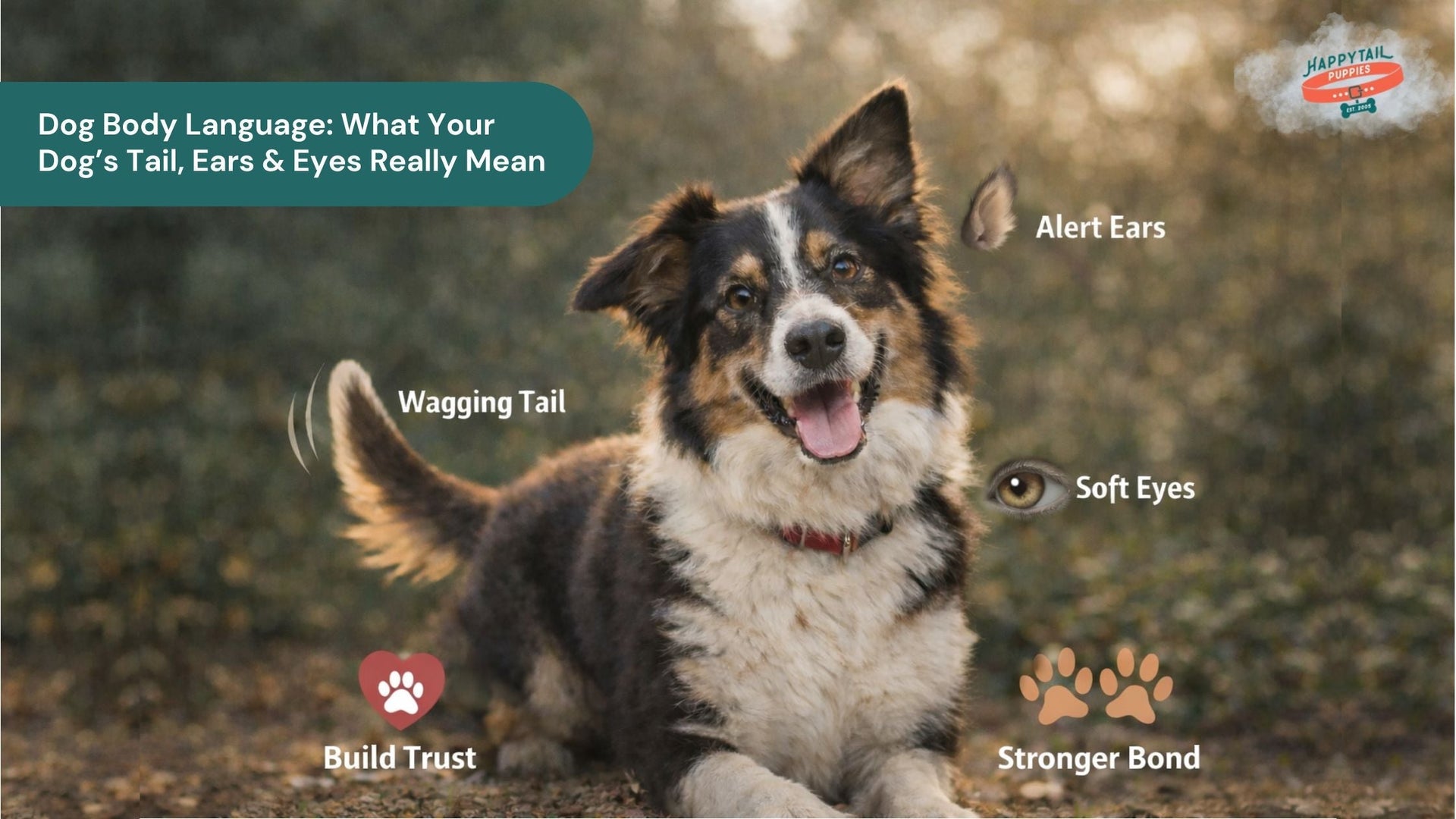
One of the most obvious signs of emotional arousal and intent is the tail of your dog. Wagging, however, is not happiness. The height of its tail, its hardness, and the speed of its movement all give an indication of what your dog is really feeling.
High and Stiff Tail
The high and stiff tail usually indicates alertness, confidence, or awareness of territory. In combination with tense body and direct eye gaze, it can be a sign of dominance or the willingness to protect oneself in new or uncomfortable circumstances.
This posture generally surfaces during elevated signs of emotional conditions, such as:
- Heightened tail carriage
- Slow stiff wag
- Raised back fur
- Forward body lean
This signals increased awareness and potential tension. Evaluate the environment without haste and do not make things worse when your dog becomes inflexible or too concentrated. Knowing why dogs wag their tails makes owners interpret emotional arousal better instead of believing that every wag is a sign that a dog is happy.
Loose, Wide Wag
The loose, sweeping tail wag, which involves the hips, is typically one of true friendliness and excitement. This loose gesture is a sign of emotional ease, particularly when combined with a wiggly, relaxed posture, soft eyes, and a relaxed expression.
This can be frequently observed in positive interactions:
- Full body wiggle
- Mid-level tail
- Fast sweeping wag
- Relaxed muscle tone
This is a body language of comfort and happiness. One of the most obvious signs of a happy dog in normal interactions is a relaxed, swaying wag with soft eyes.
Is Your Dog Truly Happy?
Discover the key signs that show your dog is happy, healthy, and thriving. Learn how to recognize your pup’s joy and strengthen your bond.
🐶 Read the Happy Dog ChecklistLow or Tucked Tail
A low or pulled-up tail is an indicator of fear, insecurity, or submission. This is the posture that dogs exhibit when they are threatened, overpowered, or insecure in their environment or those around them.
It is frequently coupled with additional stressors like:
- Tail between legs
- Crouched body posture
- Avoiding eye contact
- Ears pinned back
This is a sign of discomfort or fear. Calm them down, put space between them and triggers, and do not push your dog to interact until it is sure of its safety.
Slow Mid-Height Wag
A slower wag at mid-height is a sign that indicates uncertainties or cautious evaluation. It highlights that your dog is processing new details, deciding whether this situation is friendly, safe, or concerning.
It is mainly a moment of evaluation, such as:
- Moderate tail height
- Slow controlled wag
- Still body posture
- Focused forward gaze
Here you pup is gathering details. So, offer them enough space to assess calmly and avoid any sudden movements that heighten uncertainties.
What Your Dog’s Ears Mean
The ears of a dog are very expressive and react immediately to changes in emotions. Ear positioning, whether upright, flattened, or slightly tilted, provides instant information about attention, comfort, and stress.
Ears Forward
When the dog's ears are pointed forward, the dog is alert and focused. This stance is one of active interest in a sound, motion, or new stimulus in the environment.
Ears inclined forward are a clear sign of assessment or curiosity:
- Upright ear posture
- Directed toward stimulus
- Slight head tilt
- Still body stance
This is a focused posture. Keep track of the signals that will accompany the interest and see whether it will be neutral or turn to tension.
Relaxed Ears Back
Ears that are subtly angled backward often portray their friendly side, calm engagement, or submission. This posture is often witnessed during greetings, mainly when combined with a relaxed tail wag or soft eyes.
It is generally associated with positive social interactions, such as:
- Slight backward tilt
- Soft facial muscles
- Relaxed mouth shape
- Loose body posture
This is a sign of coziness and friendliness. React to positive communication and emotional safety by responding calmly but with affection.
Ears Flattened Tightly
Pinned ears indicate fear, anxiety, or extreme stress. This posture is usually included in a larger stress display as a dog gets overwhelmed or threatened.
Keep a close watch for additional warning signs like:
- Ears pressed flat
- Lowered body stance
- Rapid lip licking
- Avoidance behavior
It is an effective stress indicator. Less environmental pressure will be relieved at once, and your dog will feel safe.
One Ear Up, One Back
Your dog may show signs of mixed information when they have one ear forward and the other backward. This one-sided stance is common with them when listening to new sounds or when they are in doubt.
It represents split attention or perplexity:
- Asymmetrical ear position
- Shifting eye focus
- Slight head turn
-
Paused body movement
Here, your pup is assessing the situation. Give mild instructions and give them time to learn what is taking place.
What Your Dog’s Eyes Mean

A dog's eyes give profound insight into its emotional state. Minor variations in posture, tension, and direction of gaze demonstrate comfort, stress, confidence, or defensive motive.
Soft, Relaxed Eyes
Soft eyes are somewhat squinted or almond-shaped, with loose muscles on the face. This term describes relaxation, trust, and varying levels of comfort in a safe or comfortable place.
It is generally observed in happy times:
- Gentle eye squint
- Relaxed brow area
- Slow blinking pattern
- Loose facial muscles
Calm proximity, relaxed blinking, and soft eye contact are also good signs that your dog trusts you and feels safe when in your company.
Hard Stare
A hard stare is intense and involves making a fixed and harsh eye contact with minimal blinking. This phrase is frequently used to indicate challenge, protectiveness, or possible aggression in different situations.
It is frequently associated with physical tension, such as:
- Direct unblinking gaze
- Stiff body posture
- Closed-tense mouth
- Raised neck fur
This is a warning sign. Direct confrontation must be avoided, and a calm redirection is necessary to control the escalation.
Whale Eye
The Whale eye happens when a dog looks directly at us and then turns its head a bit away, revealing the whites of its eyes. This serves as a good sign of pain or fear.
It tends to manifest itself during stressful events:
- Visible eye whites
- Head turned away
- Tense facial muscles
- Frozen body stance
This is an indication that your dog is uncomfortable. Ease the pressure at once and reconsider the case in order to re-establish comfort.
Rapid Blinking or Looking Away
Blinking or even consciously staring away is a soothing response. This is a behavior that dogs adopt in order to defuse tension and prevent conflict.
It is not always obvious, but considerable:
- Quick repeated blinking
- Breaking eye contact
- Head turned aside
- Relaxed body shift
This is an appeasement gesture. Respect the signal and avoid increasing pressure in that moment.
Practical Tips to Understand Your Dog Better
The more you are used to observing patterns, situations, and emotional changes, the better you will understand the dog's body language. These brief tips will put you in a better position to have a better interpretation of the signs and signals of communication of your dog.
Observe Before Reacting
Take a moment to react to your dog's behavior. Attention shifts in response to changes in the environment, stimuli in the vicinity, and tension in the body. Determining the order of events reveals the true meaning of actions.
Learn Your Dog's Baseline
Be familiar with your dog's behavior and appearance when he is completely relaxed. Understanding their rest posture, vitality, and expressions will enable you to promptly notice some alterations in their emotions. With smaller companion breeds such as the Teacup Cavapoo, such minor changes in posture or ears can be particularly significant rough features in determining how the creature feels.
Watch Signal Combinations
Single-cues should not be interpreted separately. The movements of the ears, eyes, and posture are collaborative. A cluster of signals provides a clearer interpretation of intent when read.
Respect Calming Signals
Any request for space is accompanied by lip-licking, yawning, blinking, or turning away. Recognition of these alleviating signals will stop all that and demonstrate that you acknowledge limits to your dog.
Don't Punish Warnings
Barking and grimacing are forms of communication, not misconduct. Weighting punitive warnings stifles signals and so predisposes risk. Rather, eliminate arousing factors and strengthen non-threatening actions.
Spend Time Together
Frequent walks, brief exercises, and silent contemplation enhance your relationship. Staying in regular contact advances knowledge and helps you observe emotional fluctuations earlier.
Conclusion
How you read your dog's body language changes your interaction with the dog. With every wag, twitch, and look, there is a story of their feelings at that moment. You can achieve a safer, trust-based relationship by paying attention to tail movements, ear positioning, eye signals, and overall posture.
Your ability to relate to the dog's emotional needs will improve day after day, and the process will help you turn the ordinary into a meaningful conversation between you and the dog.
Related Articles: